Places

BURFORD

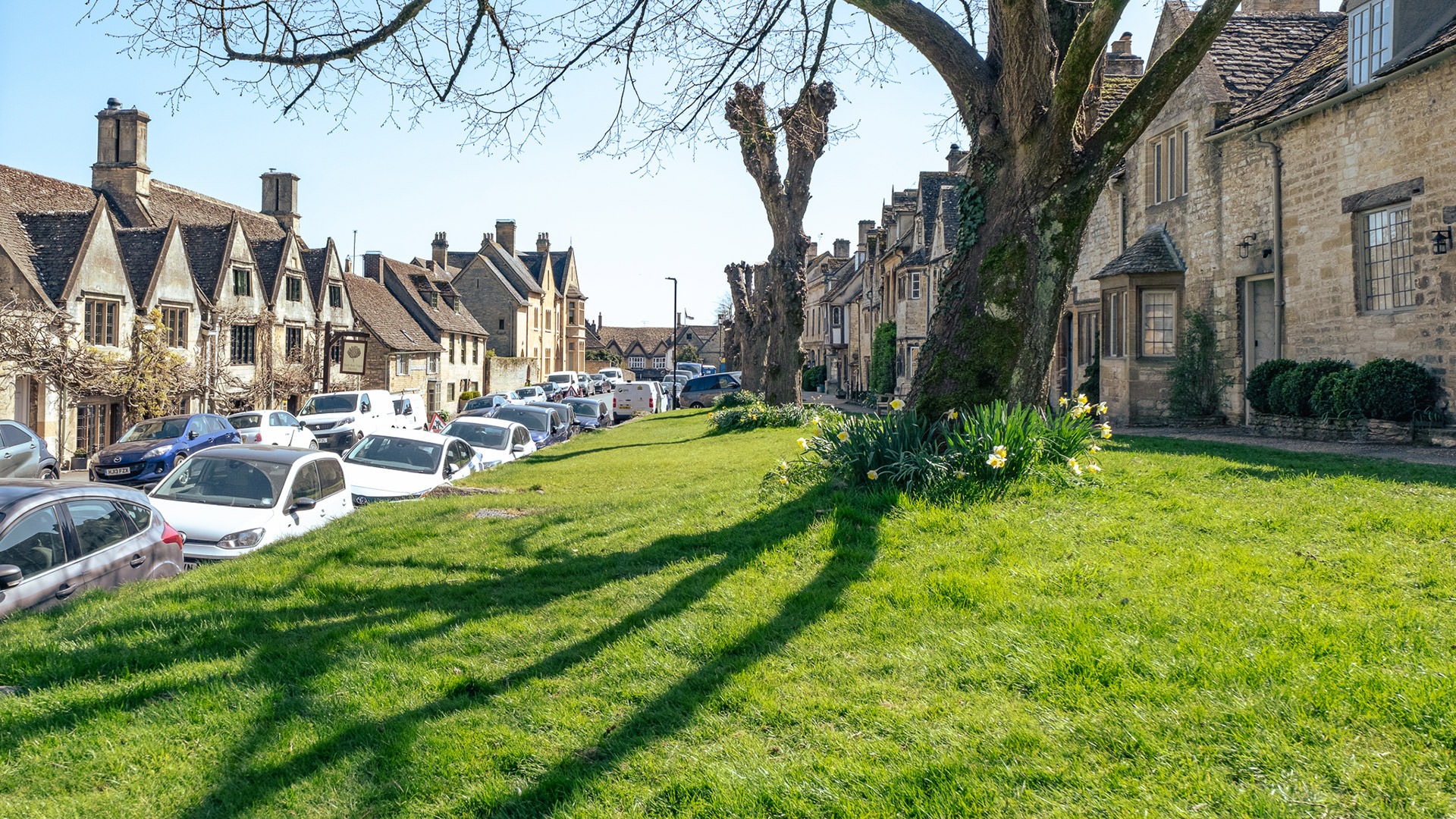
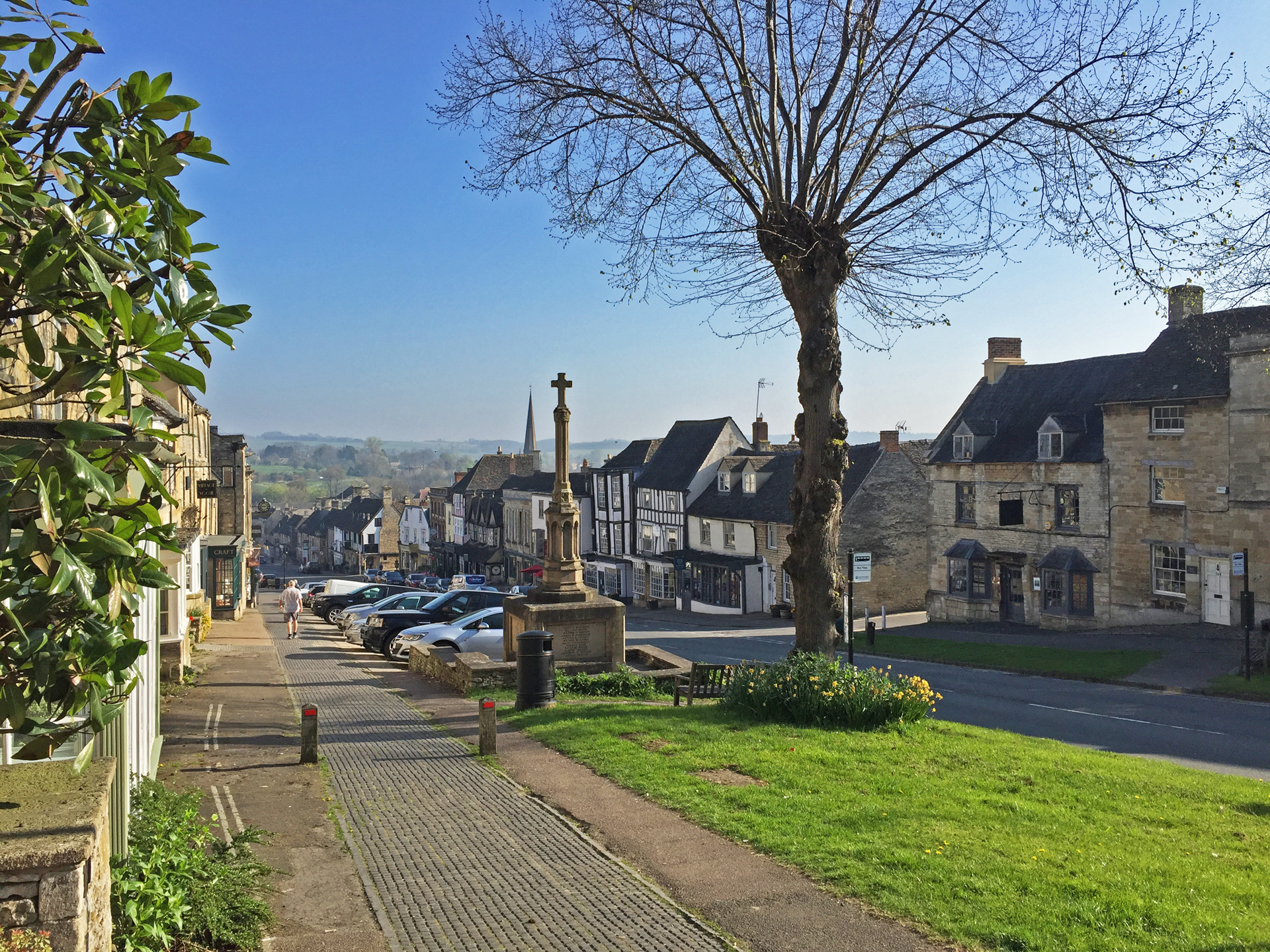
Burford's sloping High Street, wool-merchant architecture and riverside setting have earned it the name "Gateway to the Cotswolds." Here is how to understand the town properly — its history, its best walks, and where to eat, shop and stay nearby.

Share:
IMG 0285.2

Burford’s sloping High Street, wool-merchant architecture and riverside setting have earned it the name “Gateway to the Cotswolds.” Here is how to understand the town properly — its history, its best walks, and where to eat, shop and stay nearby.

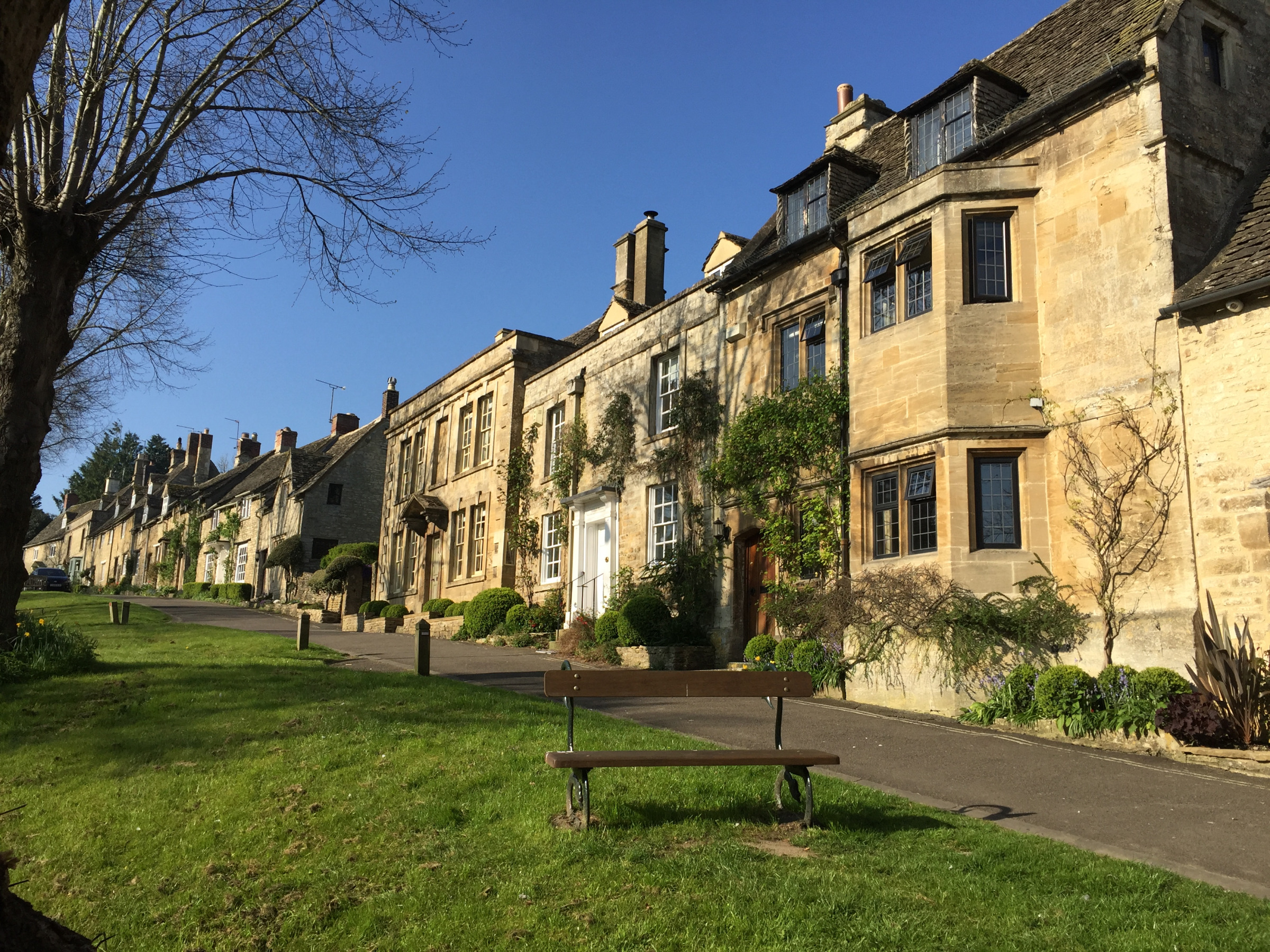
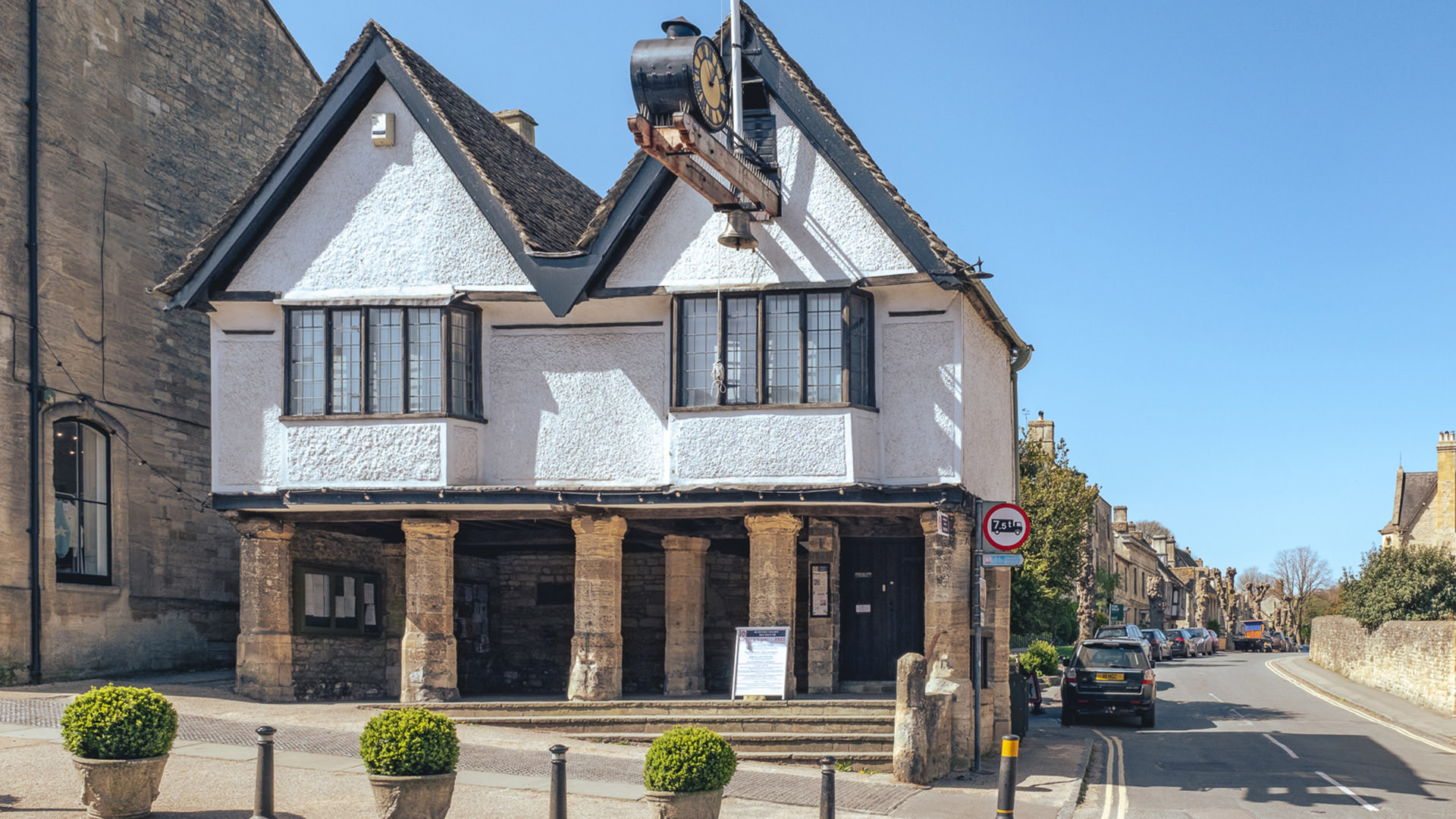
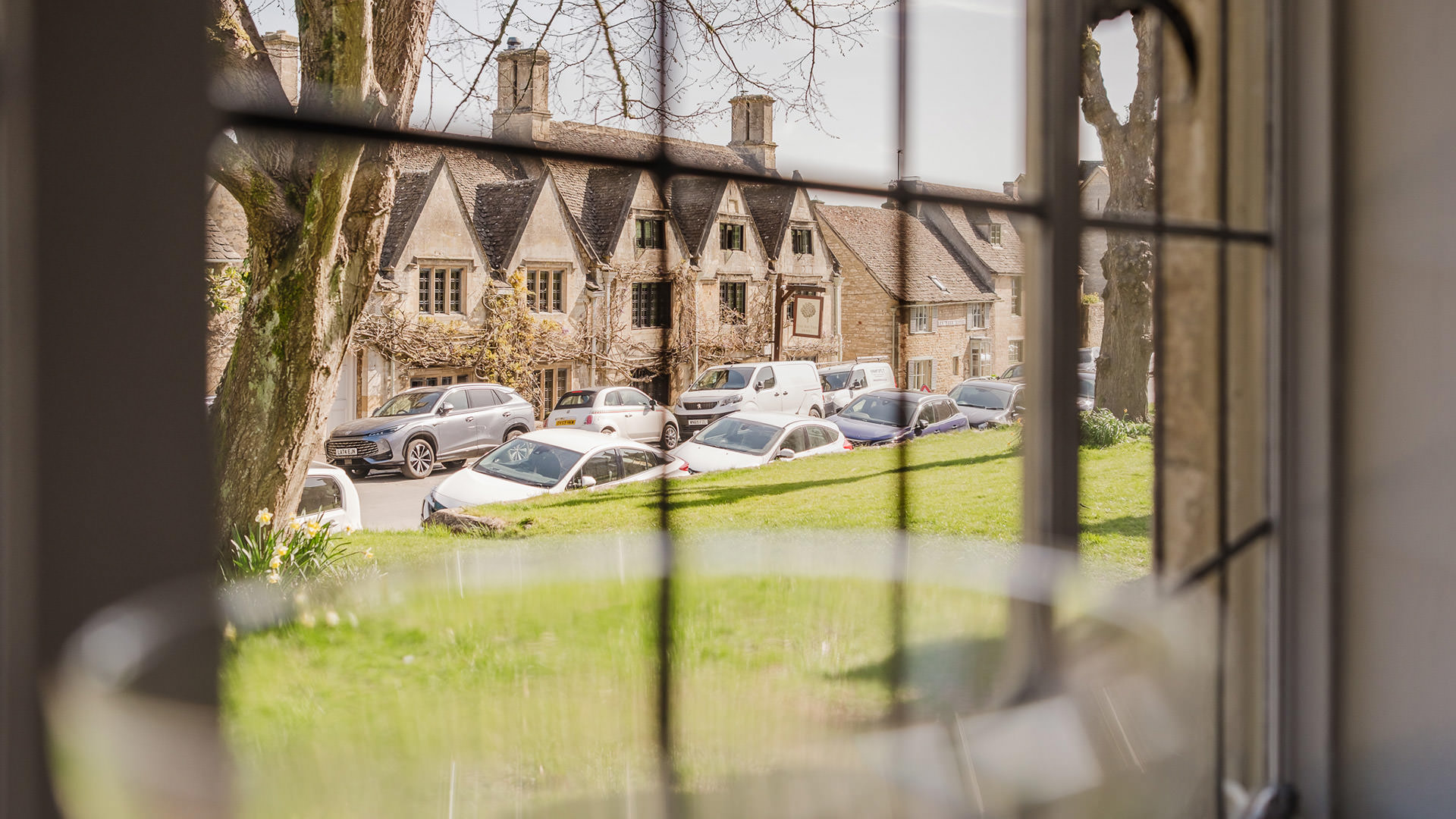
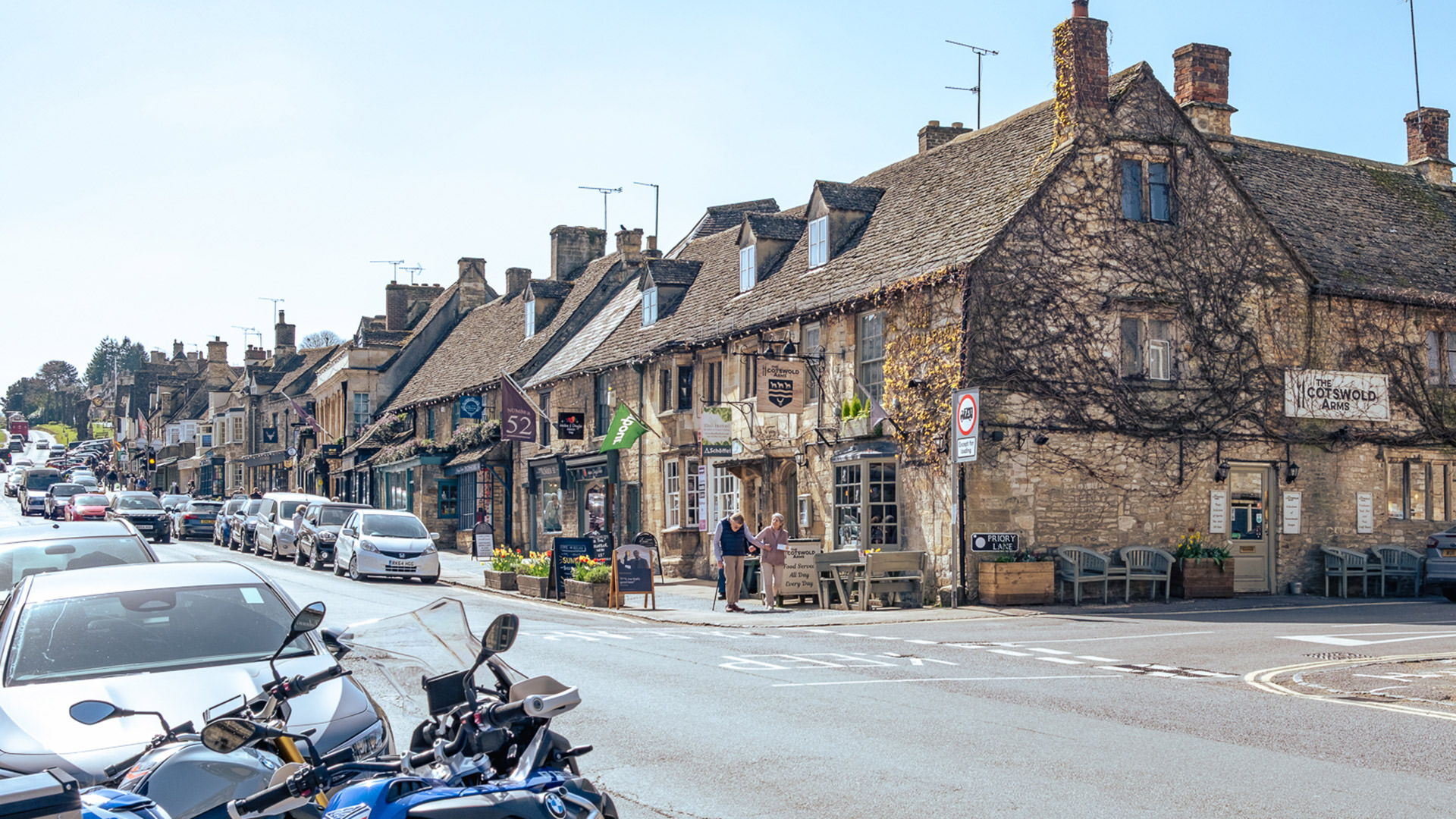
Burford is a small market town on the western edge of Oxfordshire, sitting where the A40 crosses the River Windrush and marking, for many visitors, the point at which the Cotswolds properly begin. Its High Street runs downhill from the old coaching routes to a medieval bridge over the Windrush, lined the whole way with stone-built wool merchants’ houses, coaching inns and independent shops. It is compact enough to explore in an afternoon, yet layered enough — in church history, Civil War history and trading history — to reward a much longer look. This guide sets out what makes Burford worth the detour, from its medieval church and museum to the walking country and villages that surround it.

Burford at a Glance

Location Western Oxfordshire, on the River Windrush, at the eastern edge of the Cotswolds
Known as The “Gateway to the Cotswolds”
Distance from Oxford Around 18 miles; about 30 minutes by car
Distance from London Approximately 90 minutes via the M40 and A40
Nearest railway stations Kingham, Shipton-under-Wychwood and Charlbury, each roughly 20 minutes away by taxi, with services to London Paddington and Oxford
Parking A long-stay public car park at the bottom of the High Street, near the river, with limited on-street parking above it
Best known for Its wool-town High Street, the Church of St John the Baptist, Cotswold Wildlife Park and the surrounding Windrush Valley villages

Walking Burford’s High Street

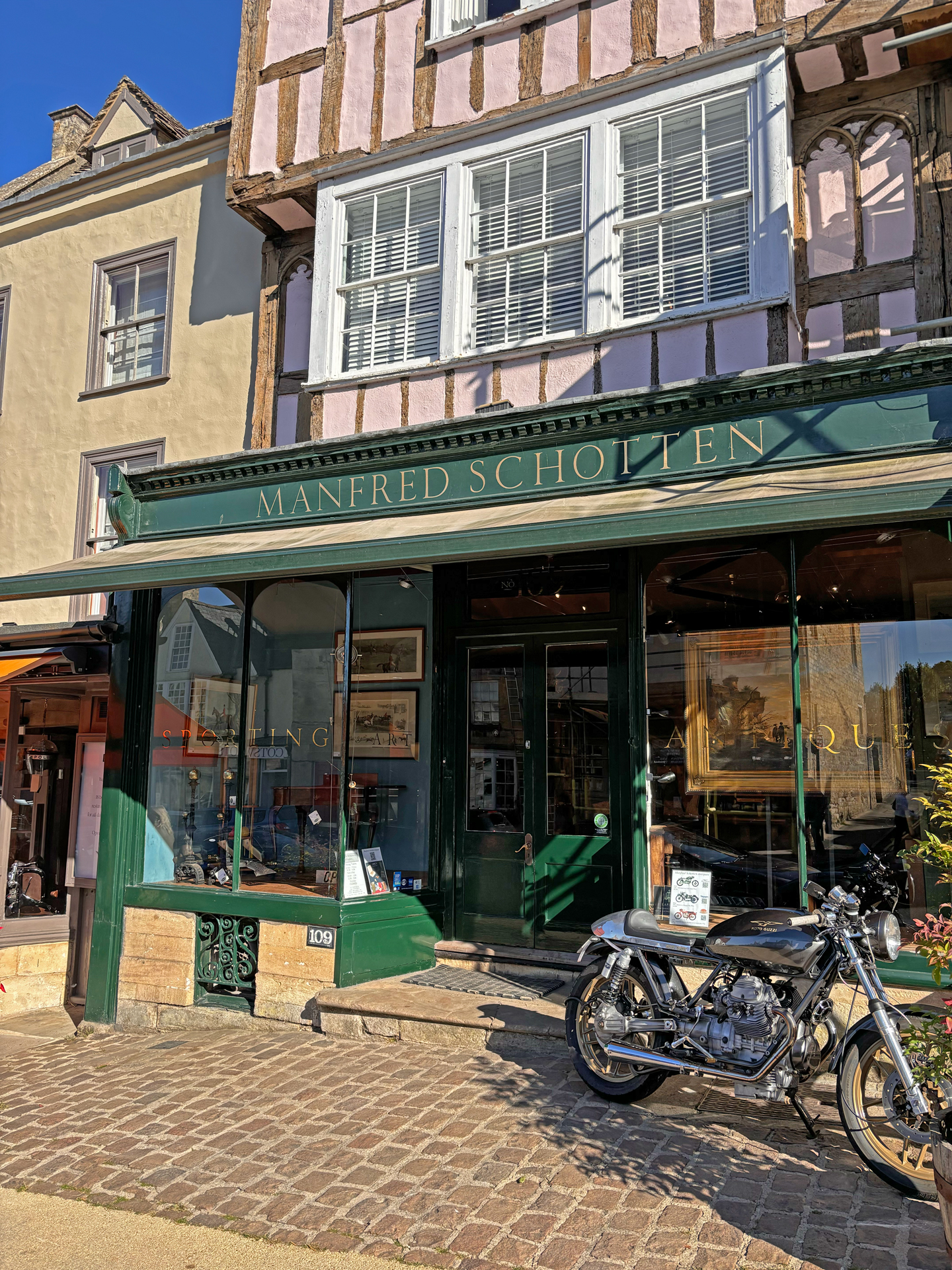
Burford’s High Street is the reason most visitors come, and it rewards slow walking rather than a quick pass-through. Chain retailers are notably absent; in their place is a run of independent shops, several long-established antiques dealers — among them Burford Antiques Centre, Bygones of Burford and Antiques at the George — and a handful of galleries and gift shops housed in listed stone buildings. Serious collectors should seek out Manfred Schotten Antiques at 109 High Street, established for more than forty years and regarded as one of the country’s leading specialists in sporting antiques and sporting art, from antique golf clubs and cricket bats to equestrian pieces and vintage motorcycles. At the top of the town, the Burford Garden Company has grown over some four decades from a local garden centre into a well-regarded emporium of plants, homeware, outdoor furniture and food, and is worth building time into a visit for.

The street ends at a narrow stone bridge over the Windrush, a good vantage point for the water meadows beyond and a natural point to turn back, or to continue on foot into the surrounding countryside.

Where to Eat and Drink in Burford

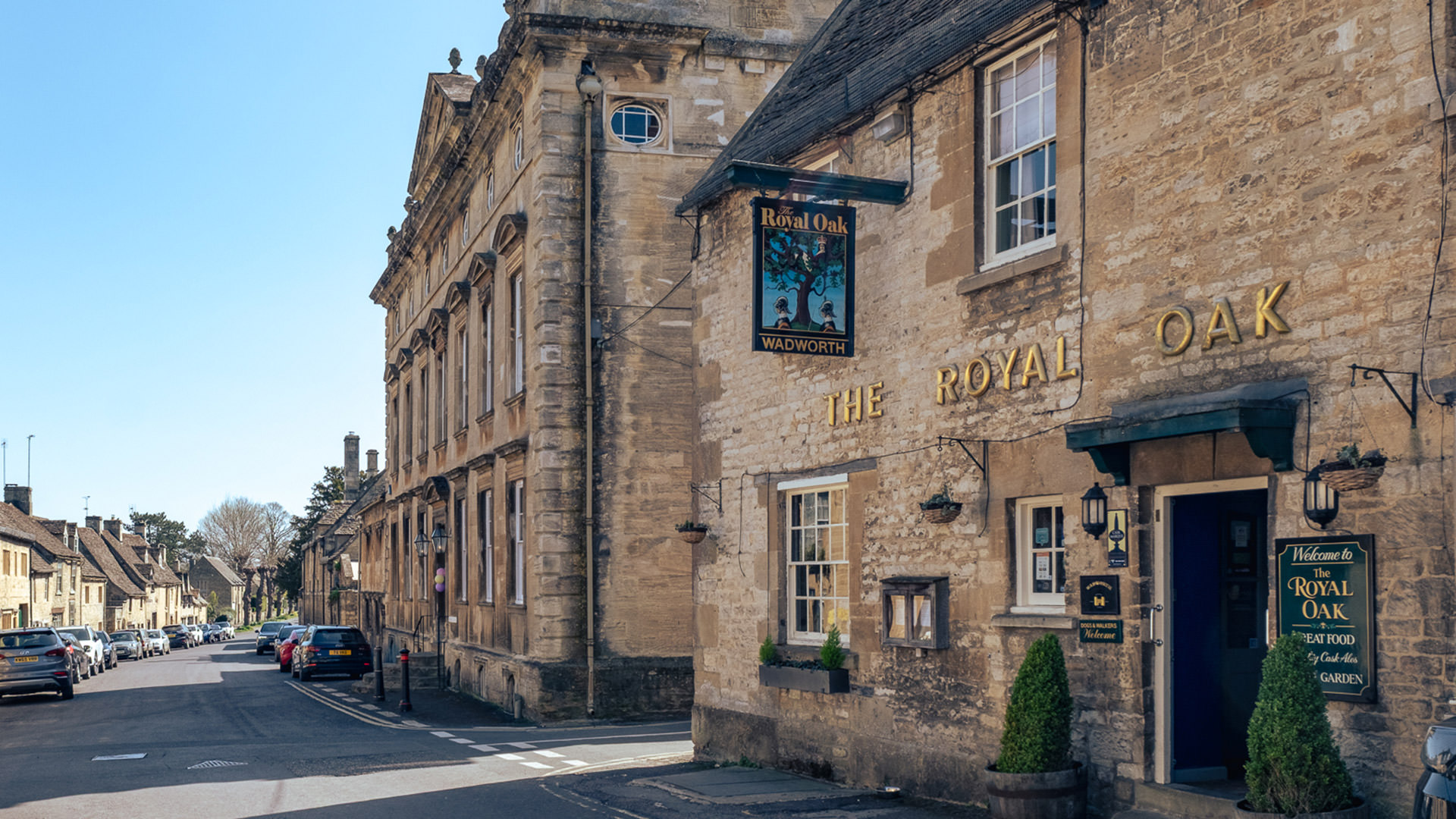
Burford’s food and drink scene has sharpened considerably in recent years, and now runs from historic coaching inns to genuine destination dining.

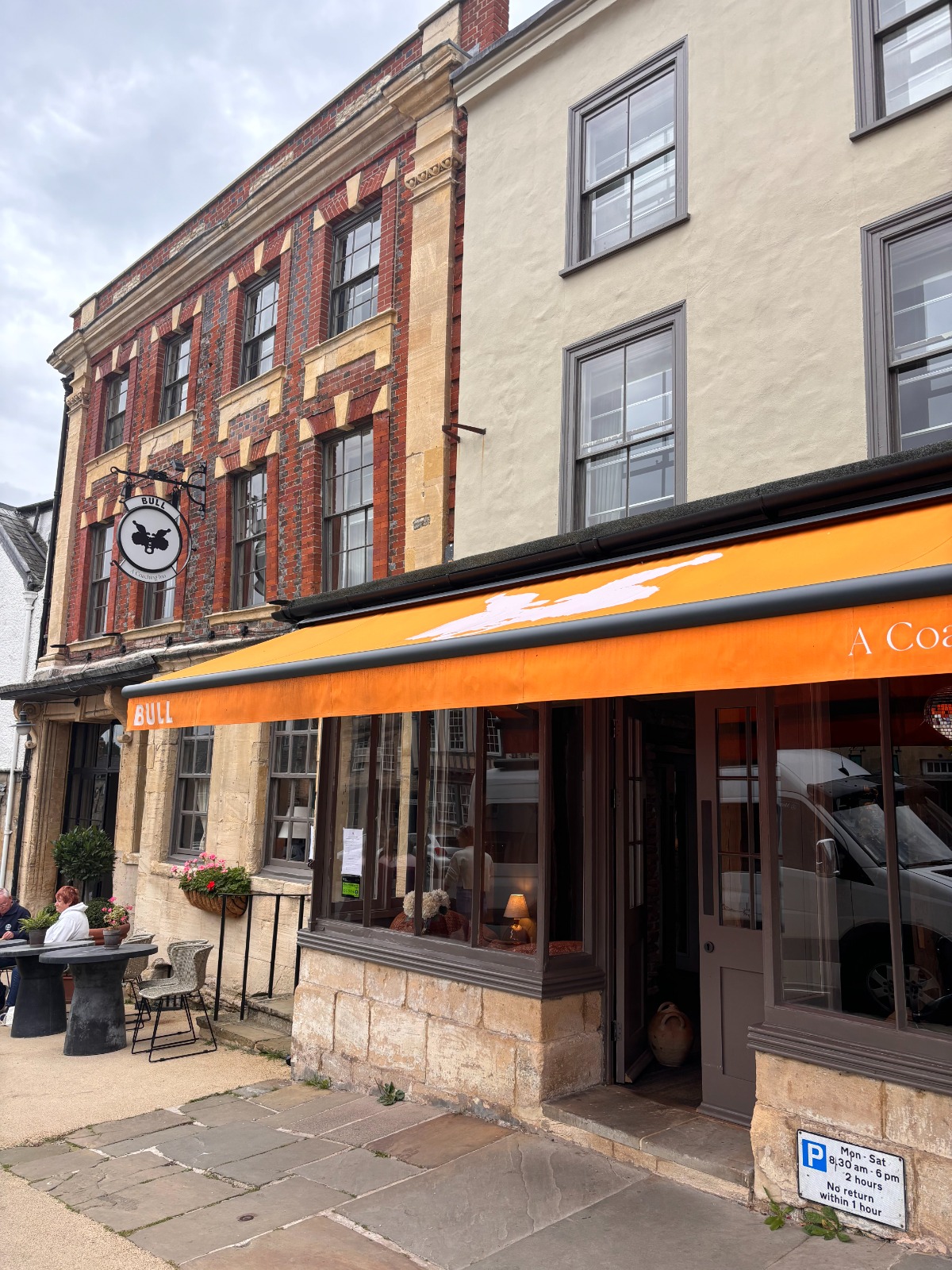
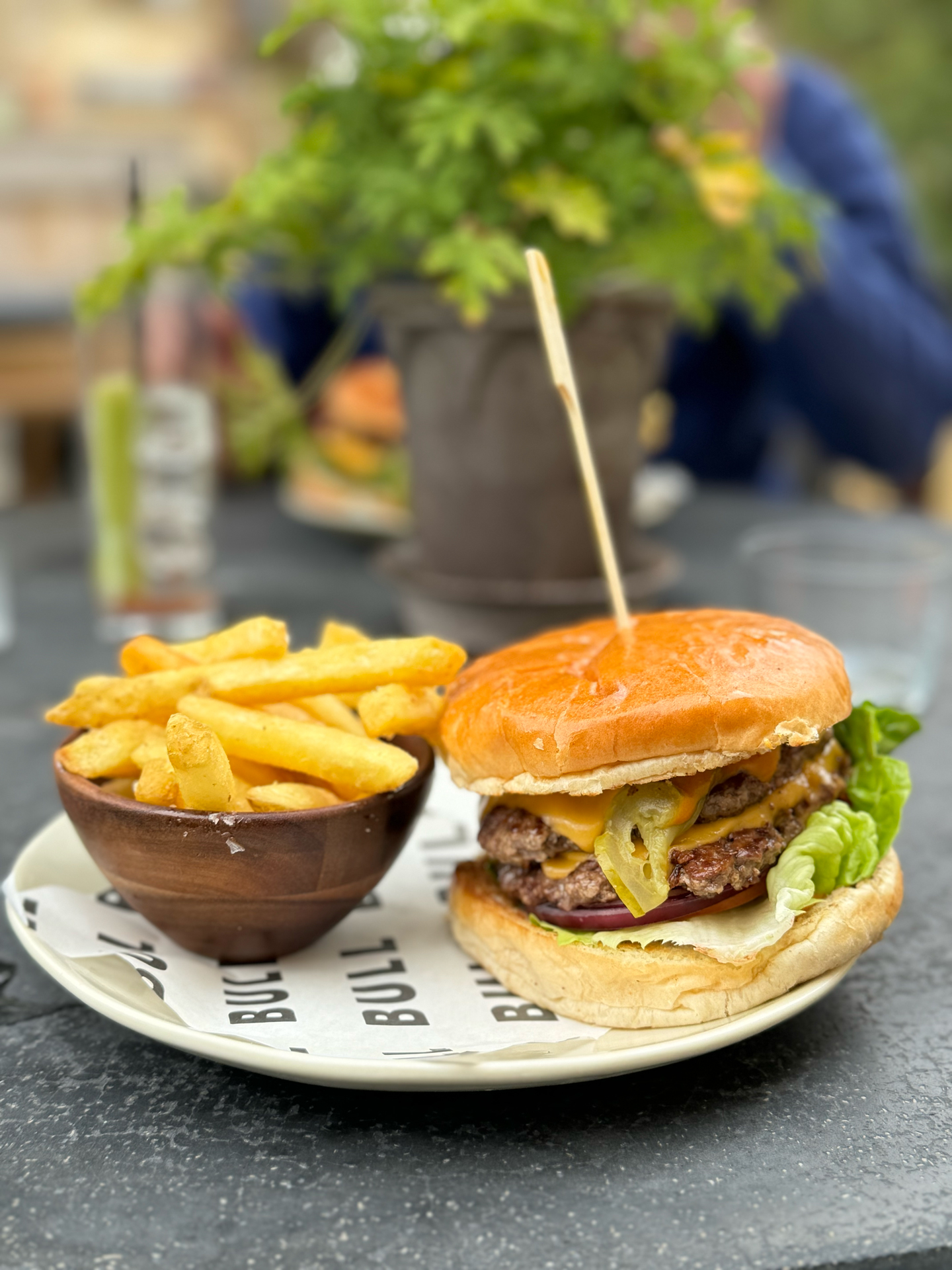
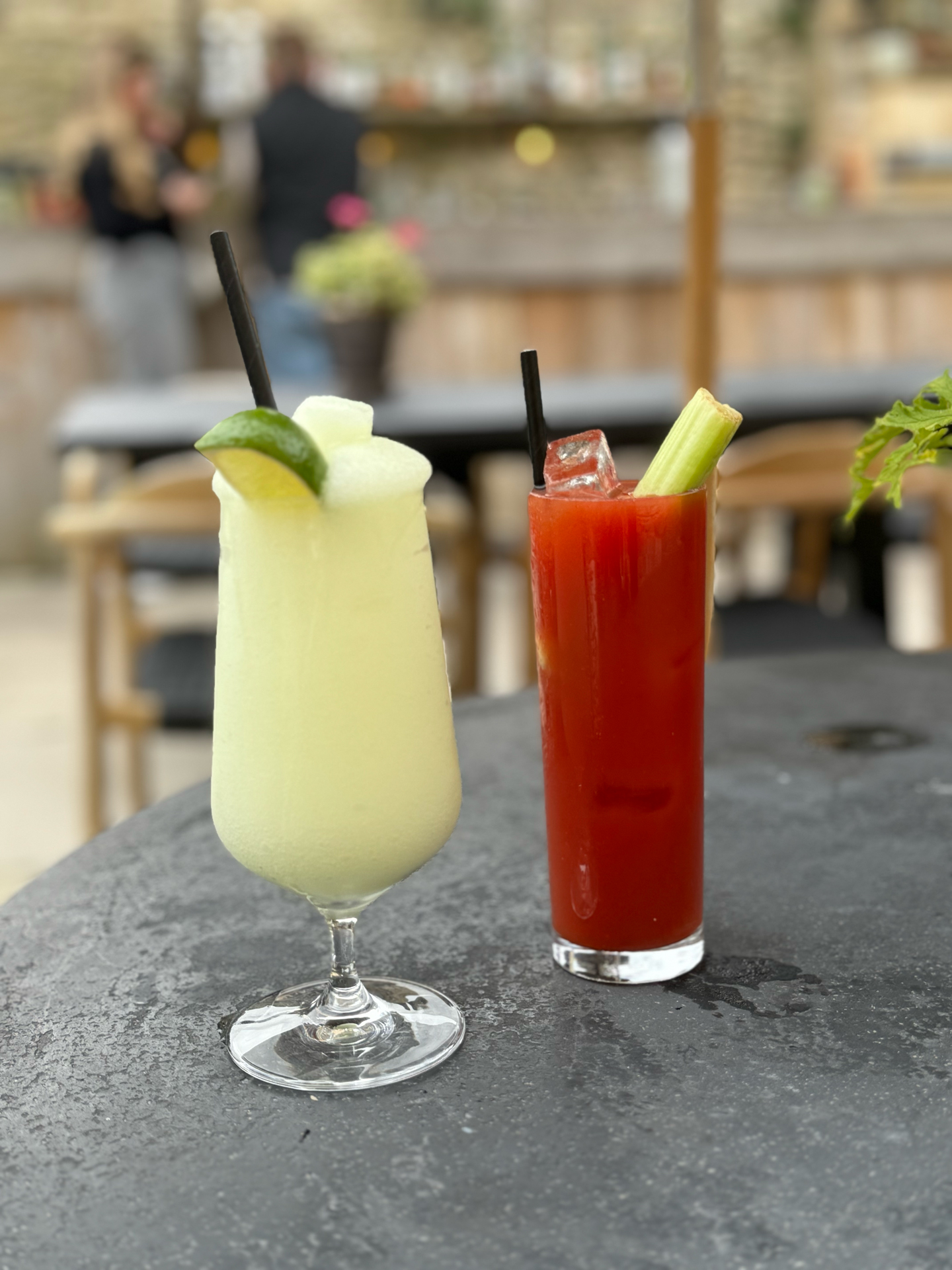
  • The Bull at Burford, an intimate 18-bedroom Grade II listed 16th-century coaching inn at 105 High Street, is the town’s most talked-about recent arrival. Owned by Matthew Freud and hung with works by artists including Banksy, Dalí and Damien Hirst, it houses four distinct restaurants and two bars: Horn, its signature dining room; Wild, an open-fire courtyard restaurant; Sl’ice, a terrace pizzeria and gelato bar; and Hiro, a ten-seat omakase counter led by Nobu’s former head chef. It suits guests who want a proper destination meal, not just a pub lunch.
  • Highway, at 117 High Street, is The Bull’s recently refurbished sister property fifty metres down the road — an 11-bedroom inn built around Toro, a lively Spanish-inspired tapas restaurant, alongside a cosy bar.
  • The Lamb Inn, tucked just off the High Street on Sheep Street, is a two-AA-rosette dining room in a stone-built old English inn, known for seasonal, produce-led menus.
  • The Angel, a sixteenth-century former coaching inn, has also held two AA rosettes and has been named Cotswold Pub of the Year on several occasions.
  • The Cotswold Arms offers a more straightforward pub menu — pies, fish and chips and vegetarian options — in a relaxed, locals-friendly setting.

For a wider view of dining across the region, we have a guide to the best restaurants in the Cotswolds and the best country pubs in the Cotswolds both setting Burford’s options in context.
BURFORD IN MORE DETAIL

Cotswold Wildlife Park and Gardens

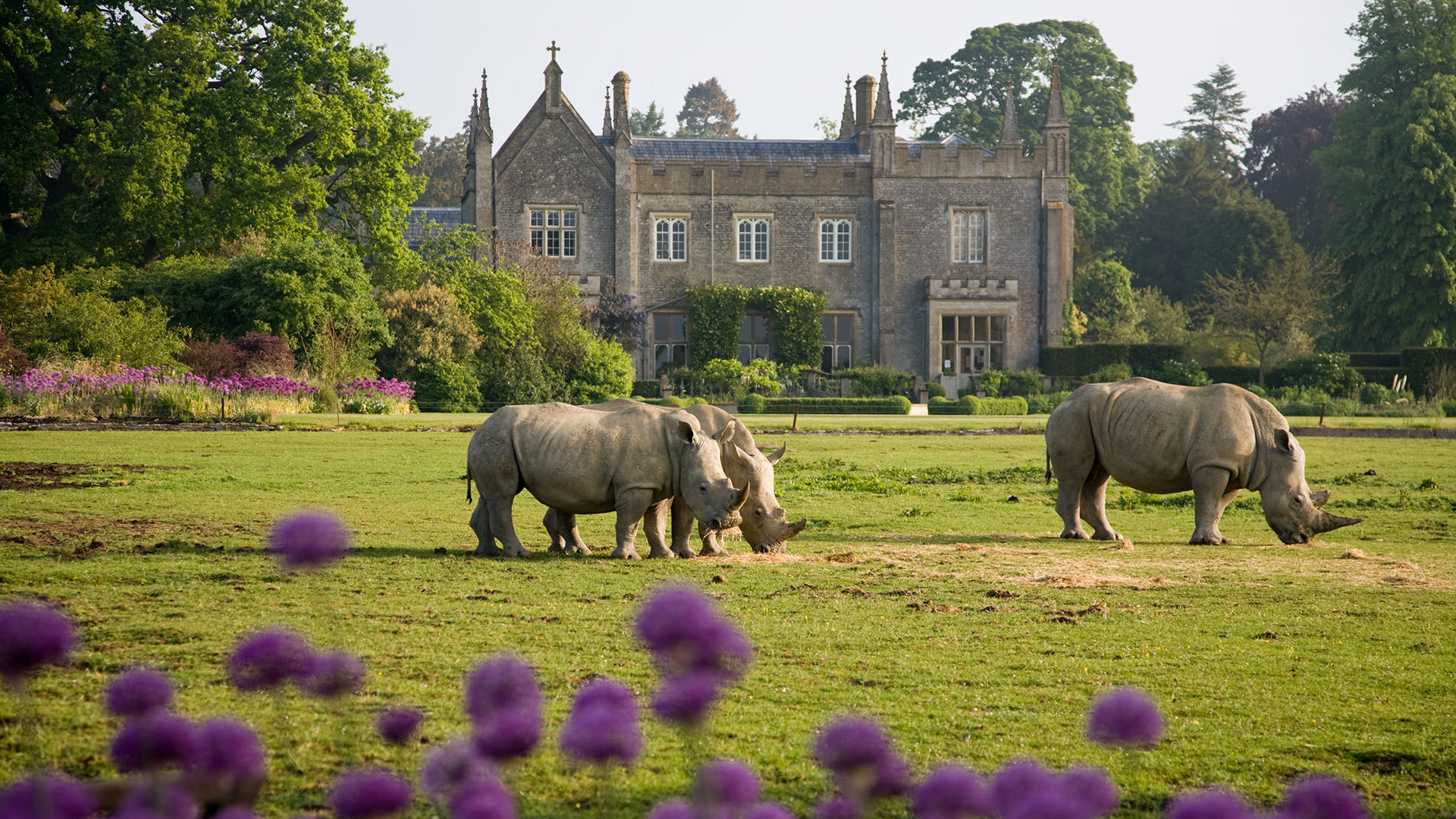
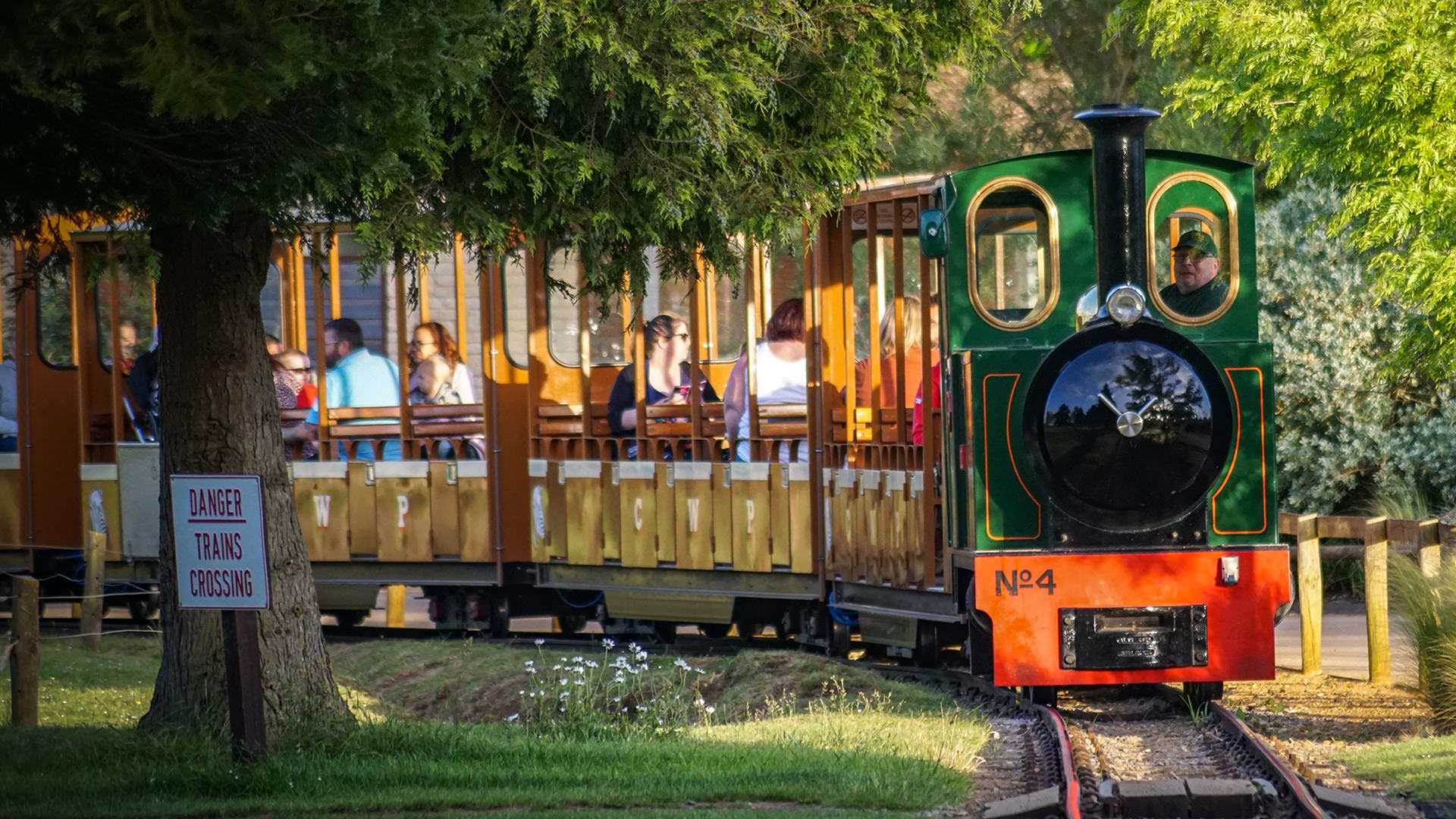
Two miles south of Burford on the A361, at Bradwell Grove, is Cotswold Wildlife Park and Gardens — a genuinely worthwhile half-day out, particularly for anyone travelling with children. The park was founded in 1970 by John Heyworth, who opened the grounds of his family’s Bradwell Grove estate — including its 1804 manor house — to the public as a way of funding the property’s upkeep while sharing his own interest in wildlife. It has since grown into one of the country’s most visited zoological attractions, set across 160 acres and home to more than 1,500 animals across some 250 species, from giraffes and rhinos to smaller reptiles and birds. It remains a family-run operation, now overseen by the founder’s son.

The Windrush Valley: Walks to Swinbrook, Asthall and Minster Lovell

Burford sits at the start of some of the Cotswolds’ most rewarding low-level walking, following the River Windrush through a string of small villages. A well-used circular route heads north-east along the river to Asthall, loops through Swinbrook, and returns via Fulbrook — around six miles in total, mostly on riverside paths and quiet lanes, though sections can be muddy after rain. Shorter options link just Swinbrook and Asthall in a two-mile loop for a gentler outing.

Swinbrook and the Mitford Graves

Swinbrook’s small church, St Mary’s, dates largely from the twelfth and thirteenth centuries and is worth the walk in its own right. It holds two sets of striking Fettiplace family monuments — recumbent effigies stacked in threes, as though on shelves — and, in the churchyard, the graves of four of the six Mitford sisters: Nancy, Unity, Pamela and Diana, buried alongside their parents, Lord and Lady Redesdale. The family’s only son, Tom, killed in Burma in 1945, is remembered with a memorial inside the church. The Mitfords grew up nearby at Swinbrook House, built by their father in 1926.

Minster Lovell Hall and Dovecote

A short distance further along the Windrush, in the opposite direction from Burford, lie the ruins of Minster Lovell Hall, a fifteenth-century manor house built in the 1430s for William, Baron Lovell, one of the wealthiest men in England at the time. It later passed to Francis, Viscount Lovell, a close ally of Richard III, before falling into decline and eventual demolition in the eighteenth century. The atmospheric riverside ruins, together with a separate fifteenth-century dovecote that once housed some 700 pairs of doves, are cared for by English Heritage and open for exploration.

For more on the historic houses and landmarks that punctuate this part of the Cotswolds see our guide to the best historic houses to visit in and around the Cotswolds and how to plan a heritage day in the Cotswolds offer further routes to plan around.

Planning Your Visit

Burford is easy to reach by car, sitting directly on the A40 between Oxford and Cheltenham, and the town’s long-stay car park at the foot of the High Street is the most reliable place to leave a vehicle, particularly at weekends when on-street spaces fill quickly. Travelling by train, the nearest stations are Kingham, Shipton-under-Wychwood and Charlbury, each around 20 minutes away by taxi, with direct services to London Paddington and Oxford — useful to know if a stay nearby is built around a car-free weekend.

Burford also makes a natural anchor point for exploring further afield. It sits within what is often called the Cotswolds’ Golden Triangle, alongside Chipping Norton, Stow-on-the-Wold, Kingham and Great Tew, and is one of several working Cotswold market towns worth building a stay around. Those drawn to quieter villages beyond the town will find Swinbrook and Asthall covered among our prettiest Cotswold villages, both famous and quieter.

Where to Stay Near Burford

Burford’s position on the eastern edge of the Cotswolds puts it within easy reach of several of our collections, including The Kingham Cottages Collection and Bruern Cottages, both a short drive from the town and well placed for exploring the Windrush Valley. For a fuller sense of what is available nearby, our full portfolio of Cotswold properties can be filtered by location.

However you choose to base yourselves, our concierge team can help build a day around Burford into a wider stay — from a private table at one of the town’s inns to a quieter walking route along the Windrush timed to the season.

In Short

Burford earns its title as the Gateway to the Cotswolds honestly: a working wool town turned market town, with a church, a museum and a High Street that tell that story plainly, and a ring of villages and riverside walks around it that reward a slower look. It suits a couple of hours as easily as a full day, and works equally well as a first taste of the Cotswolds or a considered return visit.

If you are planning a stay nearby, enquire with our team and we will help you build a visit to Burford and the Windrush Valley around the right property for your group.

© Greenstone FHL Ltd 2026