
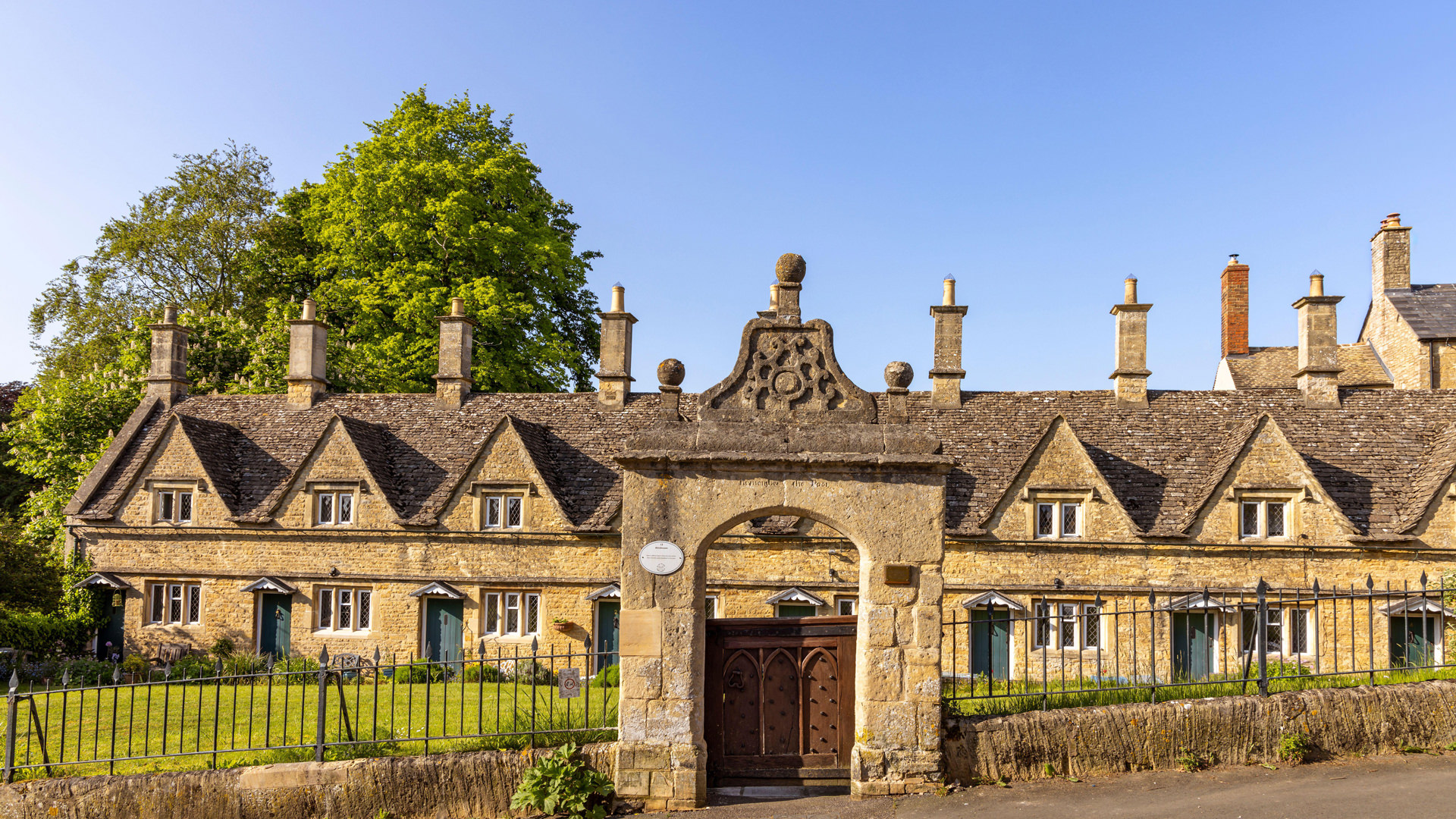
“Chippy” pairs a genuine working market town with one of Oxfordshire’s most talked-about country retreats on its doorstep at Great Tew.
Chipping Norton — known locally simply as “Chippy” — is the highest town in Oxfordshire, built on the wool trade and later on tweed, and it remains one of the more unpretentious market towns in the Cotswolds despite the fashionable company it now keeps. Its Market Square and wool church tell a straightforwardly working history, while a few miles out of town, Great Tew and Soho Farmhouse have made this corner of Oxfordshire a genuine draw for London weekenders. This guide sets out what makes Chipping Norton worth building a visit around, from its own streets and mill history to the villages and countryside around it.
Chipping Norton at a Glance
| Location | North Oxfordshire, at the north-eastern edge of the Cotswolds, the highest town in the county |
| Known as | “Chippy” to locals |
| Distance from Oxford | Around 20 miles; about 35 minutes by car |
| Distance from London | Around 75 miles; roughly 1 hour 45 minutes by car |
| Nearest railway station | Kingham, around 5 miles away, with direct services to London Paddington and Oxford |
| By road | On the A44 and A361, within easy reach of the A34 |
| Best known for | Bliss Tweed Mill, its Market Square and Town Hall, St Mary’s wool church, and Soho Farmhouse and Great Tew nearby |
Exploring Chipping Norton’s Market Square
Chipping Norton’s Market Square sits at the heart of the town, overlooked by the Town Hall, a proud reminder of the days when Chipping Norton was itself a Borough. A short walk downhill on Church Street leads to St Mary’s Church, a genuine Cotswold wool church whose nave was largely rebuilt in the late fifteenth century in Perpendicular Gothic style, paid for by the wool merchant John Ashfield — a direct link to the trade that first made the town prosperous.
That trade was reinvented in the nineteenth century at Bliss Tweed Mill, built in 1872 for the Bliss family and designed, unusually, to resemble a grand Italianate country house, its chimney rising through a central dome. At its peak the mill wove 25,000 yards of tweed a week and employed some 400 workers — a huge proportion of the town’s roughly 900 households at the time — though it was also the site of a bitter eight-month strike in 1913–14 over pay and working conditions. The mill finally closed in 1980 and has since been converted into apartments, but its distinctive silhouette still dominates views of the town.
Where to Eat and Drink in Chipping Norton
Chipping Norton isn’t a dining destination in the way Burford or Stow-on-the-Wold are, and it doesn’t pretend to be — but a little digging turns up genuine gems rather than obvious chains.
- The Chequers, recently taken on by new ownership, is where former Wild Thyme chef Nick Pullen now cooks — modern British dishes built on the same confident, seasonal approach that made his name at Wild Thyme before it closed in 2022.
- The Fox, a historic town-centre pub, pairs a warm restaurant and lounge with an open fire and a solid, comforting menu.
- Whistlers, a genuine local favourite tucked away from the main square, is known for its warm welcome and food that regularly wins over visitors who weren’t expecting to find it.
- The Old Mill Coffee, one of the town’s most characterful cafés, is a good stop for a proper English breakfast or homemade cake in relaxed surroundings.
Widening the search a little, The Crown Inn at Church Enstone, a few miles south-west, is a genuine hidden treasure — flagstone floors, exposed beams and a private garden — and sits conveniently close to Enstone Airfield, making it a natural stop before or after a flying experience (see below).
For a wider view of dining across the region, the best restaurants in the Cotswolds and the best country pubs in the Cotswolds set Chipping Norton’s options in context.
The Arts, a Cinema and Chipping Norton’s Cultural Life
Chipping Norton is a working town first, but its cultural life runs deeper than a quick pass-through would suggest. The Theatre Chipping Norton — genuinely one of the more surprising finds in the Cotswolds — occupies an 1888 Salvation Army citadel that spent years as a furniture warehouse before two RSC actors bought it in 1968 and, after a long fundraising campaign, reopened it as a theatre in 1975, with a gala evening attended by Tom Baker, then playing Doctor Who. Today it operates as a genuine multi-arts venue: a 217-seat proscenium arch theatre, a cinema, a gallery and a live music venue all under one roof — the “cool cinema” locals will point you to, and a rare thing for a town this size.
A short walk away, the volunteer-run Chipping Norton Museum, housed in the town’s nineteenth-century Co-op Society Meeting Hall, tells the town’s story in more intimate detail — a hands-on 1930s kitchen, displays on Bliss Tweed Mill and the town’s wartime years, and some 2,000 historic photographs of the town and its people.
Sport, the Lido and Taking to the Air
Chipping Norton’s sporting life is genuinely active rather than ornamental. Chipping Norton Lido, an open-air pool built through seven years of local fundraising and opened in 1970, has been run as a community charity since 2004 and remains a much-loved warm-weather fixture, with a 25-metre main pool and a separate paddling pool. The town also fields its own Chipping Norton Rugby Club, founded in 1975, and Chipping Norton Town Football Club, whose roots go back to 1893, alongside a long-established golf club.
For a different perspective on the area entirely, Cotswold Flying Experiences operates fixed-wing tours and introductory flying lessons from Enstone Airfield, a few miles from town next to Soho Farmhouse — a genuinely memorable way to see this part of the Cotswolds from the air.