
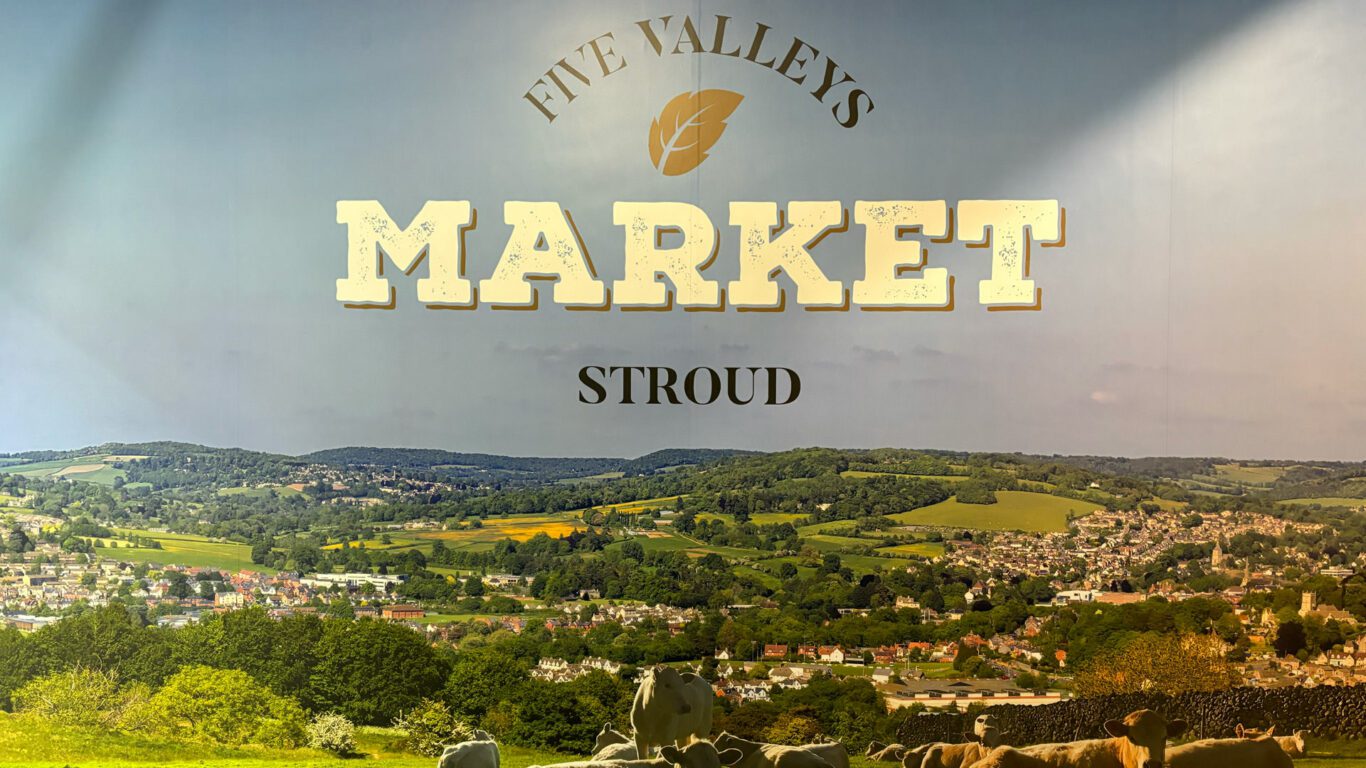
Stroud
Stroud is the Cotswolds with its sleeves rolled up: a market town shaped by five valleys, cloth mills and an independent streak.
Stroud sits at the meeting point of five river valleys on the western edge of the Cotswolds, and it looks and feels different from the postcard villages further north: steep streets, a busy year-round market, working mill buildings, and a strong contemporary arts and music scene layered over genuine industrial history. It grew rich on cloth, and remnants of that trade — including one small, unlikely export still going strong — are still part of daily life in the town. This guide sets out what makes Stroud worth building time into a Cotswolds stay for, from its markets and pubs to its walking country and creative scene.
Stroud at a Glance
| Location | Meeting point of five valleys, western Cotswolds, Gloucestershire |
| Often described as | The Cotswolds’ most overlooked market town, or “the Covent Garden of the Cotswolds” |
| Distance from Cheltenham | Around 10 miles; about 28 minutes by train, or a similar drive |
| Distance from Gloucester | Around 12 miles; about 14 minutes by train |
| Distance from London | Around 1 hour 22 minutes by direct train from London Paddington |
| By road | Just off the M5 (Junction 13), via the A419 |
| Parking | Car parks on either side of the railway station, plus further central pay-and-display parking |
| Best known for | Its Saturday farmers’ market, cloth and mill history, independent shops, and a strong contemporary arts and music scene |
A Cloth Town Built on Five Valleys
Stroud’s history is written into its landscape. The first recorded fulling mill in the area dates to 1170, and by 1680 the Stroud valleys held so many mills — around 120 at that point, later closer to 200 at the industry’s peak during the Industrial Revolution — that the area was known simply as the “land of the clothiers.” The small rivers running through the five valleys powered the mills, while Cotswold sheep grazed on the surrounding hills supplied the wool. The quality of Stroud cloth was good enough to win serious contracts: it clothed the Post Office from 1848 to 1960, supplied army tents, and produced military uniforms in the distinctive colour known as Stroudwater Scarlet.
Trade was helped considerably by two canals: the Stroudwater Navigation, first proposed around 1697 to carry coal in and cloth out, and the Thames and Severn Canal, which opened in 1790 and connected Stroud through to the wider canal network and, via the Thames, to London.
Playne’s and the Wimbledon Tennis Ball Connection
One of the more surprising survivals of Stroud’s cloth trade is still in daily international use. Playne’s, a Stroud valleys mill whose family have been in the trade since 1759, produces the woven wool felt used to cover tennis balls for Wimbledon, the French Open and the Australian Open — the wool itself often shipped in from as far as New Zealand before being felted here and sent back out around the world. It is a small, easily missed detail that says a great deal about how specialised and enduring Stroud’s textile expertise remains.
For a closer look at the mills themselves, the Stroudwater Textile Trust opens St Mary’s Mill at Chalford, a few miles from Stroud, on selected open days through the year. Built in 1820 for fine woollen cloth and set beside the canal and the old railway, the mill still holds a large mid-nineteenth-century waterwheel and an early twentieth-century Tangye steam engine, alongside a wider collection of locally made and used textile machinery; free, pre-bookable one-hour tours run on open days, with donations to the Trust welcomed.
Stroud’s Markets: The Heart of the Town
A visit to Stroud should be built around its markets, which remain genuinely central to town life rather than a tourist add-on. The multi-award-winning Stroud Farmers’ Market takes place every Saturday, 9am to 2pm (barring the week between Christmas and New Year), around Cornhill Market Place, Union Street and Threadneedle Street, and is regularly ranked among the best and busiest farmers’ markets in the country, with more than fifty stalls and around ninety different producers appearing across a typical month. Expect proper primary producers — livestock farmers, fruit and vegetable growers, cheesemakers and bakers — rather than resellers, alongside genuinely interesting sidelines from watch straps to home-made toiletries. Full details and directions are available via [Fresh N Local](https://fresh-n-local.co.uk/trader/stroud/).
Alongside the farmers’ market, the Shambles Market — in continuous operation for some 400 years, just off the High Street in the shadow of St Laurence Church — runs every Friday and Saturday from 8am to 3pm with a changing mix of traders. Every Monday, the same site hosts Vintage Mary, a dedicated vintage and retro market covering everything from haberdashery and china to kitchenware and linens. The Stroud Antique and Collectors Fair takes place on the first Monday of each month in St Laurence’s Church Hall, and Five Valleys Shopping Centre has recently added its own dedicated vintage retail line-up, Home of Vintage, alongside a Friday-evening food hall with a mix of Greek, Cuban, Japanese, Indian and Thai food to go.
For more considered retail therapy, Sandersons Boutique, an award-winning independent department store at Five Valleys Shopping Centre on King Street, stocks a genuinely upmarket line-up of designer clothing, footwear and accessories — Holland Cooper, Barbour, Max Mara and Ugg among them — alongside a strong fragrance counter running from Penhaligon’s to Parfums de Marly and Chanel.
Where to Eat and Drink in Stroud
Stroud’s dining scene has sharpened noticeably in recent years without losing its unpretentious, locally rooted character.
- Juliet, at 49 London Road, is the town’s standout recent arrival: an all-day bistro of sharing plates with Italian and French leanings, in a smart dining room of linen-topped tables and parquet flooring, recognised in the Michelin Guide as a 2025 Neighbourhood restaurant. It was opened by sculptor Danny Chadwick and named after his wife — and Chadwick is also the owner of the next entry.
- The Woolpack, a genuinely atmospheric three-hundred-year-old pub in the village of Slad, just outside Stroud, was the local of the author Laurie Lee (of “Cider with Rosie”), and remains a proper destination for its valley views, vine-covered terrace and elevated, Mediterranean-inflected pub food.
- The Corner House, also on London Road, has built a strong reputation locally for cocktails and seasonal dishes using local ingredients, with sharing platters a particular strength.
- The Stroud, the Grade II listed hotel, bar and restaurant in the centre of town, continues to operate its Bucknall Bar and main restaurant, alongside a more intimate Snug and Lounge for smaller groups.
- For something more international, Non Solo Pasta (proper Italian cooking from a Rome-born husband-and-wife team) and Kyuri Sushi (Japanese and Korean dishes made in-house by a dedicated sushi chef) both trade from the King Street indoor market at Five Valleys.
- Stroud Brewery, a canalside taproom brewing organic beer since 2006, doubles as a community hub of live music and events, and its Balcony Bar stocks wine from its Stroud Valleys neighbour, Woodchester Valley Vineyard — a multi-award-winning, single-estate winery spread across three sites and 58 acres of Cotswold limestone. The vineyard itself, a short drive from town, runs pre-bookable Classic and Premium vineyard tours and tastings year-round, the latter built around food and wine pairing, with private tours available for groups of up to 35.
- Beyond the town, The Old Fleece on the road toward Nailsworth and the Crown and Sceptre, an award-winning CAMRA community pub in the town centre with a large beer garden and live music, are both worth the detour.
For a wider view of dining and drinking across the region, the best restaurants in the Cotswolds, the best country pubs in the Cotswolds and vineyards, breweries and distilleries in and around the Cotswolds all help set Stroud’s options in context.