
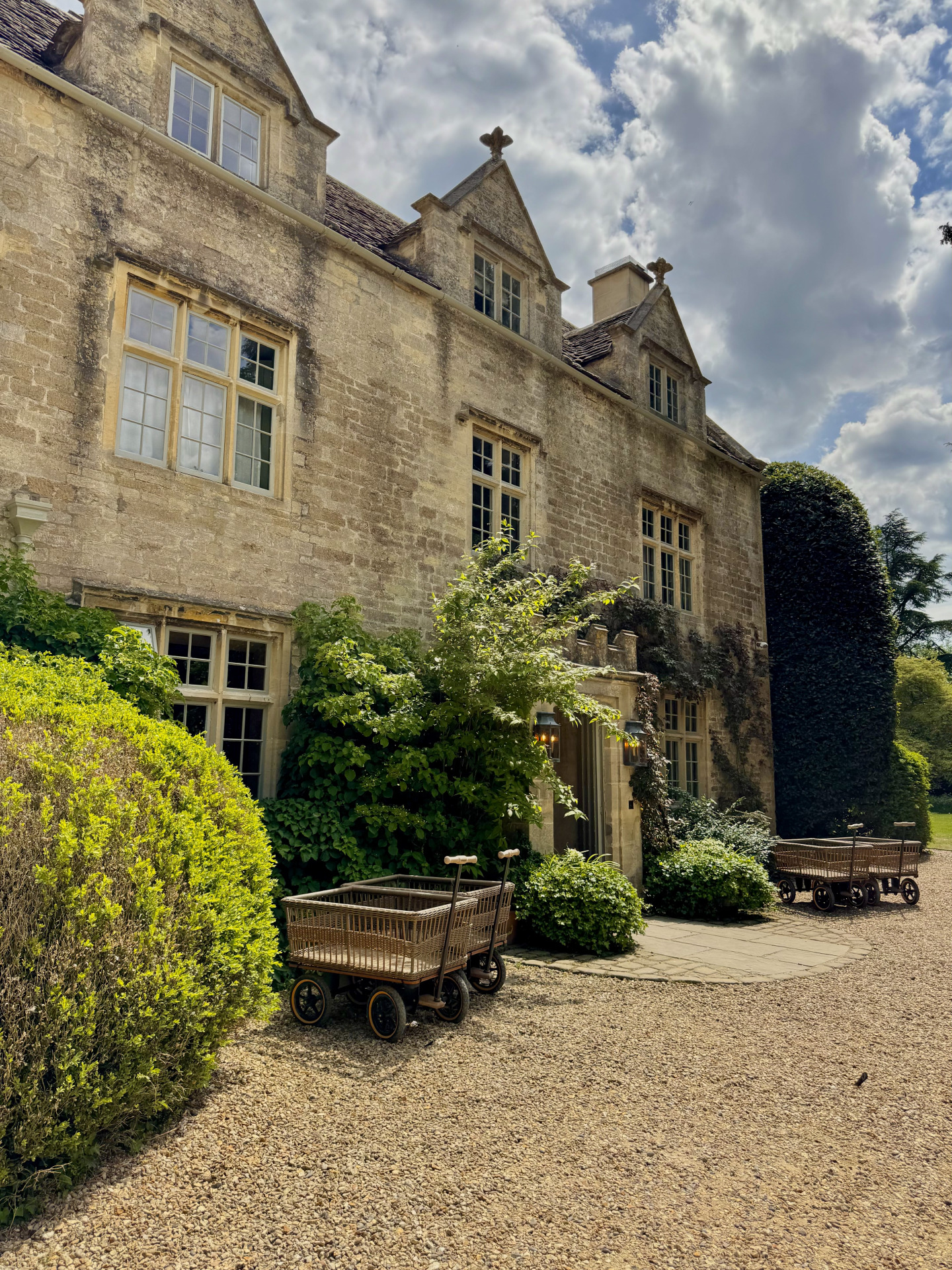
The perfect Cotswolds itinerary is not a checklist.
It is tempting to plan a Cotswolds stay around as many villages, pubs, gardens, viewpoints and market towns as possible. The region is full of beautiful places, and it is natural to want to see them all. But the best Cotswolds stays are rarely the busiest ones.
A successful itinerary should give you structure without making the trip feel rushed. It should include the places you most want to see, but also leave time for slow mornings, long lunches, countryside walks, private dining, children playing in the garden, fireside evenings and quiet moments at the house.
This is especially true when you are staying in a private Cotswolds cottage, manor house, country house or estate. The property is not simply where you sleep. It is part of the experience.
Whether you are planning a 3-day Cotswolds itinerary, a 5-day stay, a full week, two weeks or a longer countryside rental, the same principle applies: choose the right base, plan carefully and leave enough space to enjoy the region properly.
Explore our collection of luxury cottages and country houses in the Cotswolds as you consider the right setting for your itinerary.
How to Use This Cotswolds Itinerary Guide
This guide is designed for guests planning a private Cotswolds stay, not a rushed day trip.
It includes suggested itineraries for:
- A 3-day Cotswolds itinerary
- A 5-day Cotswolds itinerary
- A 1-week Cotswolds itinerary
- A 2-week Cotswolds stay
- A month-long or extended Cotswolds stay
The itineraries are flexible rather than rigid. The right plan will depend on your property, group size, season, transport, interests and how much time you want to spend at the house.
A couple staying near Broadway may want a different rhythm from a family staying near Cirencester. A group celebrating a milestone birthday in a country house will need a different plan from international guests spending two weeks in the Cotswolds as part of a wider England trip.
Use the ideas below as a framework, then adapt them around your base.
Before You Build Your Cotswolds Itinerary
Before deciding what to do each day, make four decisions.
First, choose the right base. The Cotswolds is larger than many visitors expect, and moving around takes time. Staying near Burford, Stow-on-the-Wold, Broadway, Chipping Campden, Cirencester, Tetbury, Painswick, Woodstock or the Coln Valley will each create a different style of trip.
Second, decide how much you want to explore. Some guests want a full itinerary of villages, gardens and walks. Others want the house to be the focus, with just a few carefully chosen outings.
Third, consider who is travelling. Families, couples, multigenerational groups, celebration parties and extended-stay guests all need different pacing.
Fourth, think about transport. If you are driving, you will have more flexibility. If you are arriving by train, private transfer or chauffeur, the itinerary should be planned with journeys and local access in mind.
The best Cotswolds itinerary is not the one with the most stops. It is the one that feels effortless once you arrive.
A 3-Day Cotswolds Itinerary
A 3-day Cotswolds itinerary works best when it is focused, elegant and not too ambitious.
Three days is enough time for a proper short stay, especially if you choose the right property and avoid travelling too far between places. The aim should be to enjoy one main area well rather than trying to cover the whole region.
This itinerary works well for couples, short family breaks, first-time visitors, anniversary stays, long weekends and guests combining the Cotswolds with London, Oxford or Bath.
Day 1: Arrival, Settle In and Enjoy the House
The first day should be simple.
Arrive at the property, settle in, unpack properly and allow the house to set the tone for the stay. If you are travelling from London, Heathrow, Oxford or further afield, avoid planning too much for the first evening.
A gentle first day might include:
- Arrival at the house
- A short local walk
- Drinks in the garden or by the fire
- A relaxed supper
- A private chef dinner or prepared meal
- Time to understand the house and surrounding area
For international guests, this is especially important. The first day should not be overloaded after travel. A beautiful property, a stocked kitchen, a simple dinner and a quiet evening can be a better introduction than rushing straight into sightseeing.
If you are arriving for a celebration, this first evening can also be used for a relaxed welcome meal before the main event later in the stay.
Day 2: Classic Villages, Market Towns and a Country Pub
The second day is the best time for a classic Cotswolds outing.
Choose a route that suits your base. If you are staying in the North Cotswolds, you might explore Broadway, Chipping Campden, Stow-on-the-Wold, Kingham, the Slaughters or Bourton-on-the-Water. If you are staying further south, you might focus on Tetbury, Painswick, Minchinhampton, Cirencester, the Coln Valley or nearby gardens.
The key is to choose one cluster, not several scattered places.
A good day might include:
- A late morning village walk
- Time in a market town
- Lunch in a country pub
- A short countryside or riverside walk
- Return to the house in the afternoon
- Dinner at the property or a nearby restaurant
For first-time visitors, this is often the day that delivers the classic Cotswolds feeling: honey-stone villages, countryside views, shops, pubs and gentle exploring.
For families, keep the day easy. Children often enjoy riverside villages, gardens, open spaces and shorter walks more than a long sequence of stops.
Day 3: Garden, Viewpoint or Slow Departure
The final day should not feel rushed.
If departure is later in the day, choose one gentle experience close to the property. That might be a garden, a viewpoint, a farm shop, a short walk or breakfast in a nearby market town.
Good final-day options include:
- Broadway Tower from a North Cotswolds base
- Hidcote or Kiftsgate near Chipping Campden
- Burford or the Windrush Valley
- Bibury and the Coln Valley, if timed carefully
- Painswick or Painswick Rococo Garden
- Tetbury and Westonbirt
- Woodstock and Blenheim Palace
- A final lunch before travelling home
A 3-day itinerary should leave guests feeling they have experienced the Cotswolds, not exhausted themselves trying to complete it.
A 5-Day Cotswolds Itinerary
A 5-day Cotswolds itinerary gives you more freedom.
With five days, you can combine classic villages, nature, gardens, food, local experiences and meaningful time at the property. It is one of the best formats for couples, families, international visitors and guests who want the Cotswolds to feel like more than a short break.
The aim is balance. Plan two or three strong outings, one slower day and at least one special meal or experience.
Day 1: Arrival and Local Orientation
Use the first day to arrive, settle in and explore the immediate area around the property.
Rather than driving straight to the most famous village, start locally. Walk from the house if possible, visit the nearest village or market town, collect provisions, understand journey times and let the stay begin gently.
A good first day might include:
- Arrival and unpacking
- A local walk or village visit
- Stocked provisions or a farm shop stop
- A simple supper
- Private chef dinner if arriving for a special occasion
- Early night after travel
For longer-haul guests, this should be a soft landing into the Cotswolds.
Day 2: The Classic Cotswolds Day
This is the day for the villages and towns most closely associated with the region.
From a North or Central Cotswolds base, you might include Stow-on-the-Wold, Lower Slaughter, Upper Slaughter, Bourton-on-the-Water, Broadway, Chipping Campden, Kingham or Burford.
From a South Cotswolds base, you might include Tetbury, Painswick, Minchinhampton, Nailsworth, Cirencester or the valleys around Slad and Stroud.
Avoid trying to cover both north and south in one day. Choose a coherent route.
A strong day might include:
- Morning in a market town
- One or two nearby villages
- Country pub lunch
- Short walk or scenic drive
- Afternoon return to the house
- Relaxed evening in
This is a good day to include antique shops, galleries, interiors stores, cafés or village walks, depending on your group.
Day 3: Gardens, Arboretums or Heritage
The third day works well for a garden, arboretum or heritage-focused outing.
Depending on where you are staying, consider:
- Hidcote and Kiftsgate near Chipping Campden
- Batsford Arboretum near Moreton-in-Marsh
- Westonbirt, The National Arboretum, near Tetbury
- Painswick Rococo Garden
- Sezincote near Moreton-in-Marsh
- Sudeley Castle near Winchcombe
- Blenheim Palace near Woodstock
- Cirencester for Roman history and town exploring
This kind of day suits couples, garden lovers, families and multigenerational groups because it provides structure without needing to be too active.
For a refined itinerary, pair the main visit with lunch nearby and keep the evening simple.
Day 4: A Slower Day at the House
By day four, the house should become the focus.
This is especially important for guests staying in a larger country house, manor house or estate. If the property has gardens, views, a pool, games room, terrace, outdoor dining or generous living space, give yourselves time to enjoy it.
A slower day might include:
- Breakfast at the house
- Morning swim, garden time or local walk
- Private yoga, massage or wellness treatment
- Lunch at the property
- Reading, games or time with children
- Private chef dinner in the evening
This is often the day guests remember most, because it allows the property to become more than accommodation.
For celebration groups, day four might be the main event: a birthday dinner, anniversary meal, drinks in the garden or a private catered evening.
Day 5: Food, Farm Shops and a Final Cotswolds Moment
Use the final full day or departure day for food, shopping and one more gentle experience.
Depending on your location, this might include a farm shop, market town, country pub, garden centre, local producer, village walk or scenic viewpoint.
The aim is to leave with a strong but relaxed final impression.
Good final-day ideas include:
- Burford for shops and lunch
- Stow-on-the-Wold for antiques and galleries
- Chipping Campden for architecture and heritage
- Tetbury for antiques and interiors
- Cirencester for shopping and Roman history
- Kingham and nearby villages for food-led exploring
- Lechlade-on-Thames for a relaxed riverside outing
- A final private lunch at the house before departure
A 5-day itinerary allows the Cotswolds to feel varied without becoming overplanned.
A 1-Week Cotswolds Itinerary
A week is one of the best ways to experience the Cotswolds.
With seven days, you can explore several sides of the region while still allowing the property to anchor the stay. This is ideal for family holidays, multigenerational gatherings, international visitors, summer stays, garden-led trips and guests booking a substantial private house.
A good week should include variety: villages, market towns, nature, gardens, food, time at the property and at least one day that feels completely relaxed.
Day 1: Arrival and Welcome Evening
Keep arrival day calm.
Let guests settle into bedrooms, explore the house, understand the garden, unpack and gather properly. If people are arriving from different places, this day should be flexible.
A private chef, catered supper or stocked kitchen can make the first evening feel effortless. This is especially useful for larger groups and international guests arriving after a long journey.
Day 2: Local Villages and Market Towns
Spend the second day exploring the area closest to your property.
If staying near Stow-on-the-Wold, you might visit the Slaughters, Bourton-on-the-Water, Kingham or Daylesford. If staying near Burford, you might explore the Windrush Valley, Bibury, Eastleach or the Coln Valley. If staying near Tetbury, you might focus on Westonbirt, Minchinhampton, Nailsworth or local villages.
The aim is to understand your immediate Cotswolds setting before travelling further afield.
Day 3: Gardens, Arboretums or Country Houses
Use the third day for a garden, arboretum or estate.
This could be Hidcote, Kiftsgate, Westonbirt, Batsford, Painswick Rococo Garden, Sezincote, Sudeley Castle, Blenheim Palace or another garden suited to your base.
For families, choose somewhere with enough space and variety. For couples, choose atmosphere and beauty. For multigenerational groups, consider access, walking distances and places to pause.
Return to the house before the day becomes too long.
Day 4: Slow Day at the Property
A week-long Cotswolds stay should include at least one day where the house is the destination.
This might be the day for:
- A leisurely breakfast
- Swimming or garden time
- A short local walk
- Massages or wellness treatments
- Private yoga or personal training
- Children’s activities at the house
- Reading, cooking or games
- A private chef dinner
- Drinks on the terrace or by the fire
For larger properties, this day is essential. It gives guests time to enjoy the very thing they have booked.
Day 5: Nature, Walks and Views
Use the fifth day for a nature-led experience.
Depending on your base and group, this might include:
- Broadway Tower
- Dover’s Hill
- Cleeve Hill
- Painswick Beacon
- Lower Slaughter to Upper Slaughter
- A section of the Cotswold Way
- The Coln Valley
- Eastleach and the River Leach
- Minchinhampton Common
- Cotswold Water Park
- Lechlade-on-Thames
For walkers, this can be a longer route. For families, keep it shorter and build the day around a pub, café or return to the house.
Day 6: Food, Shopping and Local Experiences
The sixth day can be more relaxed and food-led.
Visit a market town, browse antiques, book a long lunch, visit a farm shop, arrange a tasting, enjoy a local experience or let the concierge team plan something tailored.
Good options include:
- Stow-on-the-Wold for antiques and galleries
- Burford for shops and classic Cotswolds atmosphere
- Tetbury for interiors and antiques
- Cirencester for shopping and heritage
- Chipping Campden for architecture and independent shops
- Woodstock for Blenheim and Oxfordshire style
- Kingham and nearby villages for food-focused exploring
For a celebration week, this may be the best day for a special lunch or group activity.
Day 7: Final Morning and Departure
The final day should feel easy.
Allow time for a proper breakfast, packing, a short walk, a final coffee in a nearby village or one last look at the garden before leaving.
If guests are travelling internationally, consider transport timings carefully. Do not plan an ambitious final outing before an airport transfer.
The best final day leaves people feeling rested rather than hurried.
A 2-Week Cotswolds Itinerary
A 2-week Cotswolds itinerary should not be planned like a longer version of a short break.
The aim is not to fill fourteen days with activities. The aim is to create a rhythm.
Two weeks gives you time to live in the Cotswolds properly: to enjoy the house, revisit favourite places, explore different areas, invite friends or family to join, discover local routines and let the countryside become familiar.
This works especially well for families, international guests, summer holidays, school holidays, extended celebrations and guests booking a larger private house or estate.
Days 1-2: Arrive, Settle and Stay Local
Use the first couple of days to settle.
Explore the house, gardens and immediate area. Visit the nearest village or market town. Stock the kitchen. Book or enjoy a relaxed meal. Take a gentle walk. Let guests adjust to the pace.
For international visitors, this slower beginning is especially valuable. It allows the Cotswolds to feel like a home rather than a stop on a route.
Days 3-5: Classic Cotswolds Exploring
Choose two or three classic outings based on your location.
This might include:
- Broadway, Chipping Campden and Dover’s Hill
- Stow-on-the-Wold, the Slaughters and Bourton-on-the-Water
- Burford, Bibury and the Coln Valley
- Tetbury, Westonbirt and nearby villages
- Painswick, Slad and Minchinhampton
- Woodstock and Blenheim Palace
- Cirencester and the surrounding countryside
Do not do all of these in one block. Choose the combinations that make sense from your base.
Days 6-7: House Time and Private Dining
After a few days of exploring, return the focus to the property.
Plan a private chef dinner, garden lunch, family barbecue, wellness day or relaxed weekend-style pause. If guests are joining for part of the stay, this is a good point to gather everyone together.
For families, this might be when children settle properly into the house. For adults, it is often when the stay starts to feel most luxurious.
Days 8-10: Gardens, Nature and Market Towns
Use the middle of the stay to add depth.
Visit gardens, arboretums, viewpoints, quieter villages and market towns you might not have included in a shorter itinerary.
Good options include:
- Hidcote and Kiftsgate
- Batsford Arboretum
- Westonbirt Arboretum
- Painswick Rococo Garden
- Sezincote
- Sudeley Castle
- Cotswold Water Park
- Lechlade-on-Thames
- Winchcombe
- Northleach
- Great Tew
- Bledington
- Eastleach
A two-week stay gives you time to combine famous places with quieter alternatives.
Days 11-12: A Wider Day Trip or Special Experience
If the Cotswolds is your main base for two weeks, you may want one or two wider day trips.
Depending on your property location, this might include Oxford, Bath, Blenheim Palace, Cheltenham, Stratford-upon-Avon or another nearby cultural destination. These should be chosen because they enhance the Cotswolds stay, not because the itinerary needs to become a general UK tour.
For guests who prefer to stay within the region, this can instead be used for a guided walk, private tasting, garden tour, riding, cycling, spa treatment, wellness experience, private picnic or another tailored day.
Days 13-14: Slow Finish
The final days should be unhurried.
Return to favourite places. Have one last lunch. Spend time in the garden. Arrange a final dinner at the house. Keep the departure day simple.
A two-week stay should end with the feeling that you have settled into the Cotswolds, not simply passed through it.
A Month or Longer in the Cotswolds
An extended Cotswolds stay needs a different kind of itinerary.
For one month, two months or longer, the focus should shift from holiday planning to lifestyle planning. The property becomes a temporary home, and the itinerary becomes a rhythm of living.
This is ideal for guests who want privacy, space, remote working, family time, summer in the countryside, a base between homes, a longer international stay or an extended retreat.
Week 1: Settle In
Use the first week to understand the house, local area, nearest towns, favourite shops, food options, walking routes and practical routines.
Arrange any essential services early, such as housekeeping, grocery deliveries, drivers, private chefs, wellness treatments or workspace setup.
Week 2: Explore Locally
Use the second week to explore the villages, pubs, gardens and countryside closest to your base. Avoid travelling too far too soon. The aim is to make the local area feel familiar.
Week 3: Broaden the Region
Once you have settled, begin exploring further across the Cotswolds. Visit different areas, market towns, gardens, viewpoints and villages at a relaxed pace.
This is the stage where longer stays become particularly rewarding because you can see the region in layers rather than rushing through highlights.
Week 4 and Beyond: Build a Cotswolds Routine
By the fourth week, the best extended stays begin to feel natural.
You may have favourite walks, pubs, cafés, farm shops, market towns and quiet days at the house. Guests may visit. Children may have routines. Work may fit around countryside time. Meals may alternate between restaurants, cooking, private chefs and local produce.
At this stage, the itinerary is no longer about sightseeing. It is about living well in the Cotswolds.
For extended stays, consider:
- Regular housekeeping
- Private chef support
- Grocery deliveries
- Personal training or wellness
- Chauffeur or driver arrangements
- Workspace and Wi-Fi
- Local memberships or activities
- Child-friendly routines
- Visiting family and friends
- Seasonal planning
- Flexible restaurant bookings
A longer stay should feel supported but not over-managed.
Itinerary Ideas by Type of Guest
For Couples
A couple’s itinerary should focus on atmosphere, privacy and pace.
Include:
- A romantic cottage or countryside property
- A village walk
- One or two excellent restaurants
- A garden visit
- A scenic viewpoint
- A slow morning at the house
- A private dinner or special experience
Good areas include Broadway, Chipping Campden, Kingham, Burford, Tetbury, Painswick, Woodstock and the Coln Valley.
For Families
A family itinerary should be practical and flexible.
Include:
- A house with a garden or outdoor space
- Shorter walks
- Riverside villages
- Cotswold Water Park or family activities
- Market towns for easy food and shopping
- Time at the property
- A private chef or easy meals
- Rainy-day options
Good areas include Burford, Cirencester, the Coln Valley, Stow-on-the-Wold, Broadway, Tetbury, Woodstock and the Cotswold Water Park area.
For Multigenerational Groups
A multigenerational itinerary should avoid doing too much.
Include:
- Gentle outings
- Gardens and arboretums
- Market towns
- One or two special meals
- Time for children and grandparents at the house
- Flexible transport
- Optional activities rather than mandatory full-group days
The property layout is especially important. The house should allow guests to gather and separate comfortably.
For Celebration Stays
A celebration itinerary should build towards one or two key moments.
Include:
- Welcome drinks or supper
- A relaxed first day
- A main celebration lunch or dinner
- Private chef or catered meal
- Flowers, cake, styling or entertainment if required
- A gentle group outing
- Recovery time the following day
For celebrations, the itinerary should support the occasion rather than distract from it.
For International Guests
International guests often need more context and more space in the plan.
Include:
- Easy arrival arrangements
- Time to recover from travel
- Classic villages and countryside
- Gardens or heritage
- A private house experience
- Local food and pubs
- Clear transport planning
- A pace that avoids spending too much time in the car
For guests travelling from the United States, the Cotswolds often represents the English countryside they have imagined. The itinerary should deliver that experience without becoming too busy.
For Extended-Stay Guests
An extended-stay itinerary should feel more like a lifestyle plan.
Include:
- Practical local orientation
- Regular housekeeping or support
- Local shopping and food routines
- Walks and wellness
- Occasional private dining
- Visitors joining for part of the stay
- Time to explore different Cotswolds areas gradually
- Flexible transport
- Space for work, family and rest
For longer stays, the best itinerary is one that leaves room for habit, repetition and discovery.
How to Avoid a Rushed Cotswolds Itinerary
The most common itinerary mistake is trying to do too much.
A day that includes four famous villages, two viewpoints, a garden, a pub lunch and a long drive may look efficient on paper, but it rarely feels luxurious in practice.
The Cotswolds is best experienced slowly. Roads can be narrow, parking can take time, villages can be busy and larger groups move at different speeds.
A better approach is:
- Choose one main area per day
- Avoid crossing the whole region unnecessarily
- Book key meals in advance
- Leave time between activities
- Return to the house before everyone is tired
- Build in quiet days
- Accept that you do not need to see everything
This is especially important for guests staying in a high-quality private property. If the house is special, the itinerary should allow time to enjoy it.
How Luxury Cotswold Rentals Can Help Shape Your Itinerary
Luxury Cotswold Rentals brings together exceptional private homes, detailed local knowledge and a highly personal concierge service to help guests experience the Cotswolds in a way that feels tailored rather than generic.
A successful itinerary may include villages, gardens, walks, restaurants, private chefs, family activities, wellness treatments, transport, day trips, seasonal experiences and quiet time at the house. The right balance will depend on your group, property, occasion, season and length of stay.
Our Cotswolds concierge service can help with restaurant guidance, private dining, local experiences, transport, family planning, celebration support and bespoke recommendations.
Whether you are staying for three days, five days, a week, two weeks or longer, the aim is the same: to create a stay that feels effortless, personal and properly connected to the Cotswolds.
Our View: The Best Itinerary Leaves Space
The best Cotswolds itinerary is not the one that covers the most ground.
It is the one that gives the stay rhythm.
A strong itinerary includes memorable places, but it also includes time to settle in, eat well, enjoy the house, walk slowly, return to favourite spots and let the countryside become part of the experience.
For three days, keep the plan focused. For five days, add variety. For a week, build in a quiet day. For two weeks, create a rhythm. For a month or longer, allow the Cotswolds to become a temporary home.
The right private property makes this possible. It gives the itinerary somewhere to breathe.
Conclusion
The perfect Cotswolds itinerary depends on how long you are staying, who you are travelling with and the kind of property you choose.
A 3-day itinerary should be focused and relaxed. A 5-day itinerary can include villages, gardens, food and time at the house. A 1-week Cotswolds itinerary allows a fuller rhythm of exploring, dining, nature and rest. A 2-week stay gives time to settle into the region properly. A month or longer becomes less about sightseeing and more about living well in the countryside.
The Cotswolds rewards guests who plan thoughtfully but leave space. It is not a region to rush through. It is a place to enjoy through villages, gardens, views, pubs, rivers, walks, private houses and the quiet pleasure of time together.
Explore our collection of luxury cottages, manor houses and private country homes across the Cotswolds and begin planning an itinerary shaped around your property, your group and the way you want to experience the Cotswolds.