
Some Cotswolds landmarks are not castles, palaces or historic houses.
They are towers, market halls, church doors, wool churches, bridges, mills, cottages, high streets and architectural details that help define the character of the region. They may not always require a full ticketed visit, but they can shape some of the most memorable days of a Cotswolds stay.
A tower on an escarpment can become the reason for a morning walk. A market hall can explain the history of a town. A churchyard can turn a village visit into something more atmospheric. A row of cottages beside a river can become one of the most recognisable images of the Cotswolds. A high street, if you take time to look properly, can reveal centuries of trade, craftsmanship and local identity.
This article is not a general “best views in the Cotswolds” guide. The focus here is different. These are built landmarks and architectural places where history, setting and visual impact come together.
For guests staying in a private Cotswolds cottage, manor house, country house or estate, these landmarks work especially well because they can be woven naturally into the rhythm of a stay: a morning outing, a market-town lunch, a gentle walk, a scenic drive, or a quiet stop before returning to the house for dinner.
Explore our collection of luxury cottages and country houses in the Cotswolds as you consider the right base for exploring the region’s most memorable landmarks.
What Makes an Architectural Landmark in the Cotswolds?
The Cotswolds is not defined by one single monument.
Its architectural identity is built from a collection of smaller, deeply characteristic places: limestone cottages, medieval churches, old market halls, town houses, mills, bridges, almshouses, manor houses, high streets, barns, towers and garden buildings.
Some landmarks are famous in their own right, such as Broadway Tower or Arlington Row. Others are part of a wider streetscape, such as Burford High Street, Chipping Campden’s Market Hall, Tetbury’s Market House or Cirencester’s Market Place. Some are details that reward slower travel: a church doorway, a line of yew trees, a historic bridge, a mill building, a roofline or a row of cottages catching the evening light.
The best architectural landmarks in the Cotswolds are worth planning around because they help guests understand how the region was shaped: by wool, trade, faith, agriculture, landscape, local stone, craft and rural prosperity.
They are also extremely useful for private-house guests. They can add structure to a day without making the itinerary feel too formal.
The Best Cotswolds Architectural Landmarks at a Glance
For a tower and iconic viewpoint, visit Broadway Tower.
For market-town architecture, visit Chipping Campden Market Hall, Tetbury Market House, Burford High Street and Cirencester Market Place.
For famous cottage architecture, visit Arlington Row in Bibury.
For church architecture, visit Cirencester Parish Church, St Edward’s Church in Stow-on-the-Wold, St Mary’s in Painswick, Northleach Church, Fairford Church and Chipping Campden Church.
For riverside built landmarks, consider Lower Slaughter’s Old Mill, Bourton-on-the-Water’s low stone bridges, Bibury’s riverside cottages and Lechlade-on-Thames.
For a complete architectural streetscape, spend time in Chipping Campden, Burford, Painswick, Tetbury, Stow-on-the-Wold, Broadway and Cirencester.
The strongest approach is not to visit these places as isolated photo stops. Choose a few that sit naturally near your property and build a gentle day around them.
Broadway Tower: The Landmark Above the Landscape
Broadway Tower is one of the most recognisable built landmarks in the Cotswolds.
Set high above Broadway on the Cotswold escarpment, it combines architecture, landscape and long-distance views in a way few other places in the region can match. It is part viewpoint, part folly, part walking destination and part visual symbol of the North Cotswolds.
The tower works beautifully because it gives guests a sense of the shape of the countryside. From this height, the Cotswolds feels less like a collection of villages and more like a landscape of ridges, fields, lanes and distant horizons.
For guests staying near Broadway, Chipping Campden, Snowshill, Stanton, Moreton-in-Marsh or the North Cotswolds, Broadway Tower can be the centrepiece of a morning or afternoon. It pairs naturally with Broadway village, Dover’s Hill, Chipping Campden, Snowshill or a country pub lunch.
Best for:
- First-time visitors
- Couples
- Families
- Walkers
- Scenic photography
- North Cotswolds stays
- Guests who want architecture and views together
Broadway Tower is especially useful because it feels landmark-worthy without needing to dominate a whole day. Visit slowly, allow time for the surrounding landscape, then return to your private property before the day becomes too full.
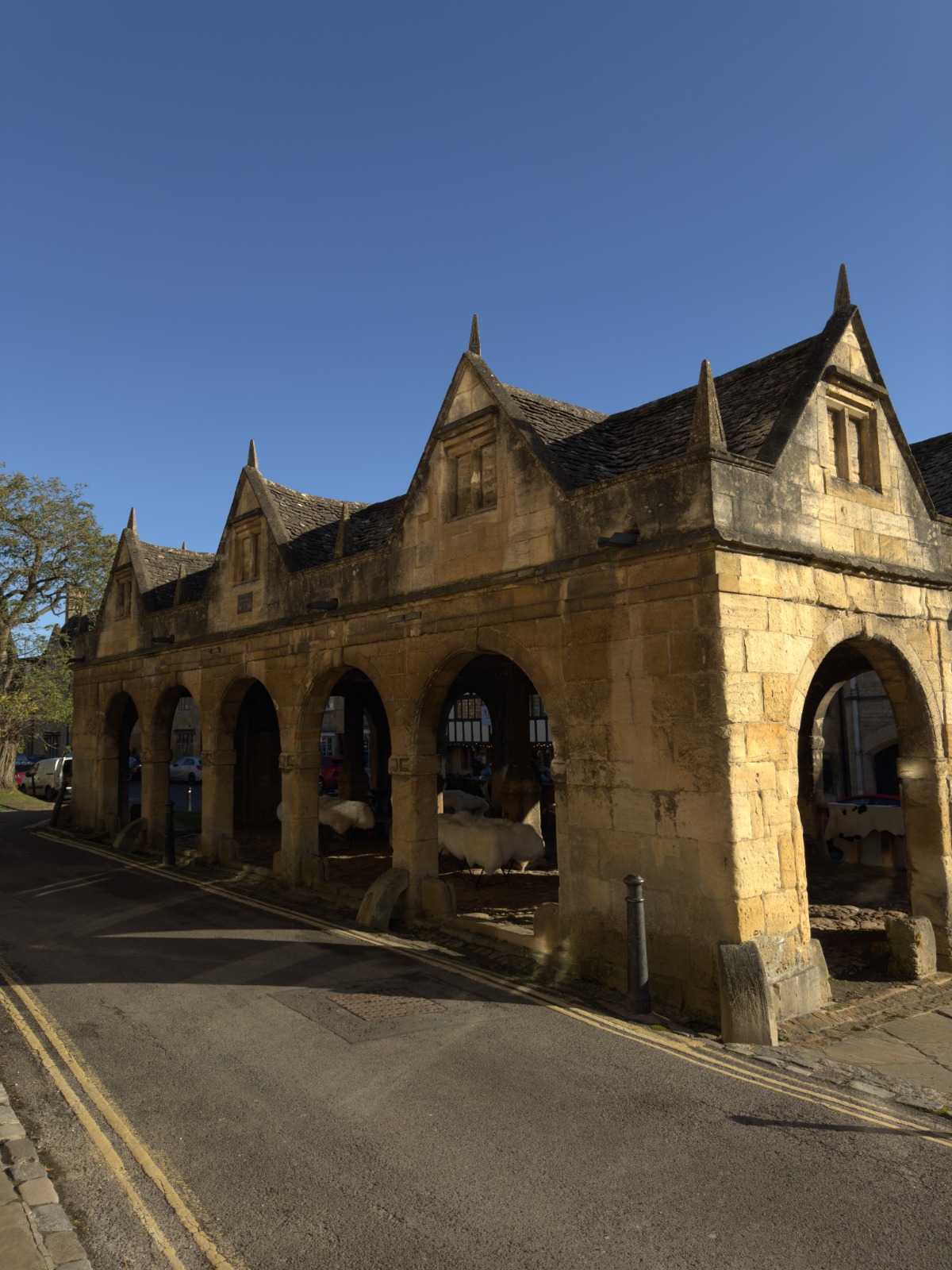
Chipping Campden Market Hall: Wool Trade and Town Architecture
Chipping Campden Market Hall is one of the most important architectural landmarks in the North Cotswolds.
Set in the heart of one of the region’s most beautiful historic towns, it is a reminder of the Cotswolds’ wool-trade prosperity and market-town life. Its open structure, stone columns and central position make it more than a building. It anchors the town.
Chipping Campden is best experienced on foot. Walk the High Street slowly, look at the rooflines, shopfronts, almshouses, church, historic houses and the long architectural rhythm of the town. The Market Hall gives context to all of it.
For guests staying near Chipping Campden, Broadway, Moreton-in-Marsh, Stow-on-the-Wold, Snowshill or the North Cotswolds, this is one of the easiest and most rewarding landmarks to include.
Best for:
- Market-town heritage
- Architecture
- First-time visitors
- Couples
- North Cotswolds stays
- Wool-trade history
- Gentle town exploring
A good Chipping Campden day might include the Market Hall, the church, a walk to Dover’s Hill or nearby gardens such as Hidcote or Kiftsgate, followed by lunch and a relaxed evening at the house.
Arlington Row, Bibury: The Cotswolds in One Image
Arlington Row in Bibury is one of the most famous architectural scenes in the Cotswolds.
Its row of historic stone cottages beside the River Coln has become one of the defining images of the region. It is often what visitors imagine before they arrive: golden stone, water, village atmosphere and a sense of age that feels immediately recognisable.
Because it is so well known, Arlington Row should be planned carefully. Bibury can be busy, especially during peak visitor times. The best experience is often early in the morning, later in the day or as part of a quieter Coln Valley route rather than a rushed stop in the middle of a crowded itinerary.
For guests staying near Burford, Cirencester, Fairford, Lechlade, the Coln Valley or the central Cotswolds, Bibury can be a natural landmark stop. It pairs well with nearby villages, riverside walks, Chedworth Roman Villa, Cirencester or a relaxed country lunch.
Best for:
- First-time visitors
- Photography
- Historic cottages
- Riverside architecture
- Central Cotswolds stays
- International guests
- Guests who want a classic Cotswolds image
Arlington Row is worth seeing, but it is best appreciated with context. Give yourself time to enjoy the wider village and valley rather than treating it only as a photograph.
Tetbury Market House: The Southern Cotswolds’ Market Landmark
Tetbury Market House is one of the most distinctive built landmarks in the South Cotswolds.
Standing prominently in the town centre, it reflects Tetbury’s historic prosperity and market identity. It is a useful landmark because it immediately tells visitors that Tetbury is not simply a pretty place to browse. It has a deeper relationship with trade, wool, architecture and town life.
Tetbury itself is one of the best South Cotswolds bases for guests who enjoy antiques, interiors, independent shops, nearby gardens and a slightly more understated Cotswolds rhythm. The Market House sits naturally within that experience.
Best for:
- South Cotswolds stays
- Market-town architecture
- Antiques and interiors
- Couples
- Longer stays
- Guests visiting Westonbirt, Highgrove area or nearby villages
- Those who want a less obvious alternative to the North Cotswolds
A Tetbury day might include the Market House, antiques and interiors shops, lunch, nearby Westonbirt Arboretum or Rodmarton Manor, then an evening back at your private house.
St Edward’s Church Door, Stow-on-the-Wold: A Photogenic Church Landmark
St Edward’s Church in Stow-on-the-Wold is one of the most photographed church landmarks in the Cotswolds, particularly because of its north door framed by ancient-looking yew trees.
The doorway has become especially popular online because of its storybook appearance. It is often linked in visitor imagination with fantasy landscapes, although claims about direct literary inspiration should be treated carefully rather than repeated as fact. Its real value is visual and atmospheric: stone, timber, trees, churchyard and the historic setting of Stow.
Stow-on-the-Wold itself is a strong market-town base and day out, with shops, galleries, antiques, pubs and a large market square. The church door should be part of a wider visit, not the only reason to stop.
Best for:
- Photography
- Church architecture
- Stow-on-the-Wold stays
- Couples
- First-time visitors
- Atmospheric details
- Guests who enjoy slower town exploring
A good Stow day might include the church, market square, shops, lunch and a short route to nearby villages such as the Slaughters, Bourton-on-the-Water or Kingham, depending on your base.
Cirencester Parish Church and Market Place
Cirencester’s Parish Church of St John Baptist is one of the great architectural landmarks of the central Cotswolds.
Standing prominently beside the Market Place, it gives Cirencester a sense of scale and historical importance. This is not a small village church. It reflects the town’s role as a major Cotswolds centre, shaped by Roman history, medieval prosperity, market-town life and the wool trade.
For guests staying in the central Cotswolds, Cirencester is especially useful because it combines heritage with practicality. You can visit the church, explore the town, visit the Corinium Museum, shop, have lunch and use the town as part of a longer stay.
Best for:
- Wool-church architecture
- Roman and medieval context
- Central Cotswolds stays
- Families
- International guests
- Longer stays
- Guests who want heritage and amenities together
Cirencester is one of the best places to understand that the Cotswolds is not only a rural destination. It also has town life, history, culture and architectural substance.
Painswick Churchyard and the 99 Yew Trees
Painswick is one of the most atmospheric architectural villages in the South Cotswolds, and St Mary’s churchyard is a major part of that identity.
The churchyard is known for its clipped yew trees, historic tombs and beautiful setting within the village. Together, they create one of the most memorable churchyard scenes in the Cotswolds. It is not a landmark that needs to be rushed. It rewards quiet attention.
Painswick itself has a distinctive character: narrow streets, stone houses, historic buildings, nearby viewpoints, Rococo Garden and a slightly more local feeling than some of the busiest North Cotswolds villages.
Best for:
- South Cotswolds stays
- Churchyard atmosphere
- Photography
- Couples
- Garden and architecture days
- Quieter village exploring
- Guests staying near Stroud, Slad, Minchinhampton or Tetbury
A Painswick day can combine the churchyard, Rococo Garden, a local walk, lunch and a return through the South Cotswolds valleys.
Burford High Street: A Complete Architectural Descent
Burford High Street is one of the great architectural streets of the Cotswolds.
Its appeal lies not in one single building, but in the way the whole street falls downhill towards the River Windrush. Shops, inns, town houses, cottages, stone walls, old signs and historic frontages create a complete sense of place.
For first-time visitors, Burford is one of the easiest towns to understand visually. It delivers classic Cotswolds architecture while also offering shops, cafés, pubs and practical access. For longer stays, it can become a useful local town as well as a landmark destination.
Best for:
- First-time visitors
- Historic streetscapes
- Shopping and lunch
- Central and eastern Cotswolds stays
- Couples and families
- International guests
- A classic Cotswolds town experience
Burford works well as part of a day with Bibury, the Windrush Valley, the Coln Valley, Lechlade-on-Thames or a countryside lunch.
Northleach Church and Market-Town Heritage
Northleach is one of the quieter places to understand the architectural legacy of the wool trade.
It is less internationally famous than Burford, Stow-on-the-Wold or Chipping Campden, but that can make it more rewarding for guests who enjoy slower and more thoughtful exploring. Its church, market-town character and central location make it a useful architectural stop from several Cotswolds bases.
Northleach works well for guests staying near Cirencester, Burford, Bibury, Cheltenham, Chedworth or the Coln Valley. It can also be paired with Lodge Park, Chedworth Roman Villa or nearby countryside.
Best for:
- Wool-trade history
- Church architecture
- Quieter market towns
- Central Cotswolds stays
- Returning visitors
- Couples
- Guests who want to avoid the most obvious stops
Northleach is a good example of a Cotswolds place that may not dominate guidebook lists, but adds real substance to a heritage-led stay.
Fairford Church and Medieval Glass
Fairford is particularly rewarding for guests interested in medieval church architecture and stained glass.
The town sits in the eastern side of Gloucestershire, within reach of Lechlade-on-Thames, Cirencester, Bibury, the Coln Valley and the wider central Cotswolds. It is quieter than the most famous villages, but it offers a specific and important architectural reason to visit.
Fairford is best suited to guests who enjoy craftsmanship, churches, slower market-town visits and heritage details. It can be paired with Lechlade, Bibury, Cirencester or a gentle countryside route.
Best for:
- Medieval stained glass
- Church architecture
- Eastern and central Cotswolds stays
- Couples
- Returning visitors
- Guests interested in craftsmanship
For a longer stay, Fairford can add a quieter and more specialist layer to your Cotswolds itinerary.
Lower Slaughter Old Mill and Riverside Architecture
Lower Slaughter is usually celebrated as one of the prettiest villages in the Cotswolds, but its built landmarks deserve attention too.
The Old Mill, riverside setting, footbridges and stone cottages create a complete village composition. It is the relationship between water, stone and architecture that makes Lower Slaughter so memorable.
This is a landmark best experienced slowly. Walk from Lower Slaughter to Upper Slaughter if time allows, pause by the river, look at the way buildings sit beside the water, and avoid treating the village only as a quick photograph.
Best for:
- Riverside architecture
- Couples
- First-time visitors
- Gentle walks
- North and central Cotswolds stays
- Photography
- Guests seeking village atmosphere
Lower Slaughter can be combined with Bourton-on-the-Water, Stow-on-the-Wold, Upper Slaughter, Naunton or a country pub lunch.
Bourton-on-the-Water’s Bridges and Village Centre
Bourton-on-the-Water is one of the busiest and best-known villages in the Cotswolds, but its architectural identity is still worth understanding.
The low stone bridges over the River Windrush, the village green, historic buildings and riverside setting create one of the most recognisable village centres in the region. It is popular for a reason.
Because Bourton can be busy, it works best when visited thoughtfully. Go early, later in the day or outside the most crowded periods. For families, it can be a useful village because there is more to do than in some smaller places. For couples seeking quiet atmosphere, nearby Lower Slaughter, Upper Slaughter or Naunton may feel softer.
Best for:
- First-time visitors
- Families
- Riverside village architecture
- Classic Cotswolds photography
- North and central stays
- Guests who want a livelier village stop
Bourton is not the quietest Cotswolds landmark, but it remains one of the most recognisable built landscapes in the region.
Broadway High Street: Architecture, Scale and Village Elegance
Broadway is one of the most elegant village streets in the Cotswolds.
Its wide High Street, stone buildings, inns, shops, galleries and gentle sense of scale make it feel different from smaller, tighter villages. It is a village with presence, and its architecture is central to that feeling.
Broadway works especially well when combined with Broadway Tower. The tower gives the high view; the village gives the architectural close-up. Together, they create one of the most complete North Cotswolds days.
Best for:
- First-time visitors
- Couples
- Shopping and galleries
- Architecture
- North Cotswolds stays
- Combining with Broadway Tower
- International guests
A Broadway day should leave enough time to walk the High Street slowly, not simply pass through on the way to the tower.
Winchcombe: Historic Streets and Sudeley Setting
Winchcombe is often discussed because of Sudeley Castle, but the town itself is an architectural landmark in its own right.
Its streets, cottages, historic buildings and position within a landscape of walking routes, abbey ruins and castle history make it one of the most rewarding heritage towns in the North Cotswolds.
Winchcombe works well for guests who want landmarks without losing the feeling of a real place. You can visit Sudeley, walk through the town, explore nearby Hailes Abbey, or use it as a base for a deeper heritage day.
Best for:
- Historic streets
- Castle and abbey routes
- North Cotswolds stays
- Walkers
- Couples
- Heritage-focused guests
- Longer stays
Winchcombe is a good choice for those who want architecture, walking and history to sit naturally together.
Which Architectural Landmarks Are Best for First-Time Visitors?
For first-time visitors, choose landmarks that are visually memorable, easy to understand and not too difficult to combine with a wider day.
Strong first-time choices include:
- Broadway Tower
- Chipping Campden Market Hall
- Arlington Row in Bibury
- Burford High Street
- St Edward’s Church door in Stow-on-the-Wold
- Cirencester Parish Church and Market Place
- Tetbury Market House if staying in the South Cotswolds
- Lower Slaughter Old Mill and riverside village setting
For a short stay, choose two or three that sit close to your property. Do not try to cross the whole region in one day. The Cotswolds rewards detail, and architectural landmarks are best enjoyed slowly.
Which Architectural Landmarks Are Best for Couples?
Couples may prefer landmarks that feel atmospheric, beautiful and easy to combine with lunch or a slower walk.
Good options include:
- Broadway Tower and Broadway
- Chipping Campden Market Hall
- Painswick churchyard
- Lower Slaughter Old Mill
- Burford High Street
- Tetbury Market House
- St Edward’s Church in Stow-on-the-Wold
- Arlington Row at a quieter time of day
For a romantic stay, the landmark should not dominate the day. It should create a memorable moment within a gentle itinerary.
A good couple’s day might include a tower, market town or churchyard in the morning, a long lunch, a short walk and a private evening back at the property.
Which Architectural Landmarks Are Best for Families?
Families often need places with space, interest and flexibility.
Good family-friendly architectural landmarks include:
- Broadway Tower, especially when paired with a walk
- Bourton-on-the-Water’s bridges and village centre
- Lower Slaughter’s riverside setting
- Cirencester Market Place and Parish Church
- Arlington Row and Bibury, if visited at quieter times
- Chipping Campden Market Hall
- Burford High Street
- Tetbury Market House for South Cotswolds stays
For children, landmarks are often most enjoyable when they are part of a varied day. Combine architecture with rivers, open space, food, gardens, shops or time back at the house.
A private Cotswolds property makes this easier because the outing does not need to carry the whole day.
Which Architectural Landmarks Are Best for International Guests?
International guests often arrive with a strong visual idea of the Cotswolds: stone cottages, historic streets, churches, gardens, towers, rivers and market towns.
Architectural landmarks help deliver that sense of place.
Strong options include:
- Broadway Tower
- Arlington Row
- Chipping Campden Market Hall
- Burford High Street
- Cirencester Parish Church
- St Edward’s Church in Stow-on-the-Wold
- Lower Slaughter
- Tetbury Market House
- Painswick churchyard
For visitors from the United States or further afield, it is especially important not to rush. These places are best experienced with context: why the stone looks the way it does, how the wool trade shaped the towns, why the churches are so large, how rivers and market halls shaped village life, and why a private house makes such a good base.
A driver or carefully planned route can help guests enjoy the landmarks without spending too much time navigating rural roads.
Which Landmarks Are Best for Longer Stays?
Longer stays allow guests to go beyond the obvious landmarks.
For a week, you might include Broadway Tower, Arlington Row, Chipping Campden, Burford and one or two church or market-house visits. For two weeks, you can add Painswick, Tetbury, Fairford, Northleach, Winchcombe, Cirencester and riverside villages. For a month or longer, these landmarks can become part of regular days out rather than a fixed sightseeing list.
A longer stay might include:
- A morning at Broadway Tower
- A slow day in Chipping Campden
- A quiet visit to Northleach
- A South Cotswolds day in Painswick or Tetbury
- A central Cotswolds day in Cirencester
- A riverside day in Bibury, Fairford or Lechlade
- A family day in Bourton-on-the-Water
- A couple’s walk through Lower and Upper Slaughter
- Return visits to favourite high streets, pubs and shops
The advantage of staying longer is that architectural landmarks can be discovered naturally, not all at once.
How to Plan an Architectural Landmark Day
A good architectural landmark day should be simple.
Choose one main landmark, then add one nearby town, village, walk or meal.
Good combinations include:
- Broadway Tower with Broadway
- Chipping Campden Market Hall with Dover’s Hill or Hidcote
- Arlington Row with Bibury, Coln Valley or Cirencester
- Burford High Street with the Windrush Valley or Lechlade
- St Edward’s Church with Stow-on-the-Wold and the Slaughters
- Tetbury Market House with Westonbirt or Rodmarton
- Painswick churchyard with Painswick Rococo Garden or Slad
- Cirencester Parish Church with Corinium Museum and lunch
- Lower Slaughter Old Mill with Upper Slaughter and Bourton-on-the-Water
- Northleach with Lodge Park or Chedworth Roman Villa
For a short stay, choose one area and enjoy it properly. For families, keep journeys short. For couples, leave time for lunch and quiet moments. For longer stays, spread landmark days across the trip.
Our Cotswolds concierge service can help with tailored routes, transport, restaurant guidance, private chefs and quieter alternatives to the busiest landmark stops.
Choosing the Right Base for Architectural Landmarks
Your property location will shape which landmarks are easiest to enjoy.
North Cotswolds
Best for Broadway Tower, Broadway High Street, Chipping Campden Market Hall, Stow-on-the-Wold, St Edward’s Church, Lower Slaughter, Bourton-on-the-Water, Winchcombe and nearby villages.
This is a strong base for first-time visitors and guests who want classic architectural landmarks close together.
Central Cotswolds
Best for Burford, Bibury, Arlington Row, Cirencester, Northleach, Fairford, the Coln Valley, Lechlade-on-Thames and riverside architecture.
This works well for families, longer stays and guests who want both landmark villages and practical market towns.
South Cotswolds
Best for Tetbury Market House, Painswick churchyard, Minchinhampton, Nailsworth, Stroud valleys, Rodmarton, Malmesbury routes and quieter architectural villages.
This suits guests who want a more understated, less obvious Cotswolds experience.
Oxfordshire Cotswolds and Eastern Edge
Best for Burford, Woodstock, Chipping Norton, Great Tew, the Wychwoods, Kelmscott, Lechlade and eastern village architecture.
This can work well for international guests arriving via London, Heathrow or Oxford.
Browse our luxury Cotswolds properties to choose a base that fits the architecture, landmarks and pace you want.
Common Mistakes to Avoid
The first mistake is treating architectural landmarks as quick photo stops. Many of these places are more rewarding when you understand their setting, history and surrounding streets.
The second mistake is confusing this kind of landmark day with a natural viewpoint day. Broadway Tower is both built landmark and viewpoint, but many architectural landmarks are about stone, craft, trade, faith and streetscape rather than panoramic views.
The third mistake is visiting only the most famous places. Arlington Row is beautiful, but quieter towns such as Northleach, Fairford, Painswick and Tetbury can be just as rewarding for guests who enjoy architecture.
The fourth mistake is going at the busiest time without a plan. Bibury, Bourton-on-the-Water, Broadway and Stow-on-the-Wold can all be much more enjoyable if visited thoughtfully.
The fifth mistake is trying to cover too much. A tower, a market town, a riverside village and a church can make a beautiful day. Six villages and a long drive will rarely feel refined.
The sixth mistake is forgetting the property. If you are staying in a beautiful private Cotswolds house, leave time to enjoy its own architecture, garden and setting too.
Practical Tips Before Visiting
Before planning an architectural landmark day, consider:
- How far the landmark is from your property
- Whether parking is likely to be easy
- Whether the place is busiest at midday
- Whether you want a guide, walk or self-led visit
- Whether nearby lunch should be booked
- Whether older guests need easier access
- Whether children need open space or a shorter visit
- Whether the landmark works better in morning or evening light
- Whether the place is a private building, church, public street or ticketed attraction
- Whether photography should be discreet and respectful
- Whether the day allows enough time back at the house
For churches, remember these are active places of worship as well as architectural landmarks. For residential streets and cottages, be considerate of people who live there. For popular villages, avoid blocking lanes, doorways or private property for photographs.
The Cotswolds is at its best when visitors treat it as a living region, not a film set.
Our View: Architecture Is One of the Best Ways to Understand the Cotswolds
The Cotswolds is often described through scenery, but architecture is just as important to its identity.
The stone, rooflines, market halls, churches, bridges, cottages, towers and high streets are what give the landscape its human story. They show how people traded, worshipped, farmed, built, travelled, lived and gathered over many centuries.
For a short stay, choose the landmarks that sit closest to your property. For a week, mix a famous landmark such as Broadway Tower or Arlington Row with quieter architectural towns. For two weeks or longer, allow the built landscape to become part of the rhythm of your stay.
Look slowly. Walk the streets. Step inside churches when appropriate. Notice market halls, doorways, bridges and cottages. Return to your private house and you may find you see its own architecture more clearly too.
Planning an Architectural Landmark Stay with Luxury Cotswold Rentals
Luxury Cotswold Rentals brings together exceptional private homes, detailed local knowledge and a highly personal concierge service to help guests experience the Cotswolds in a way that feels tailored rather than generic.
An architectural landmark stay might include Broadway Tower, Chipping Campden Market Hall, Arlington Row, Tetbury Market House, Cirencester Parish Church, St Edward’s Church in Stow-on-the-Wold, Painswick churchyard, Burford High Street, Lower Slaughter, Fairford, Northleach and carefully chosen quieter villages.
For couples, that may mean atmospheric towns, landmark viewpoints and long lunches. For families, it may mean riverside villages, open spaces and easy routes. For international guests, it may mean a refined introduction to the visual language of the English countryside. For extended stays, it may mean exploring the region slowly, one town, church, tower or riverside scene at a time.
Explore our Cotswolds concierge service for tailored itineraries, transport, private dining, local guidance and carefully planned days from your chosen property.
Conclusion
Broadway Tower may be the most obvious architectural viewpoint in the Cotswolds, but it is only one part of a much wider built landscape.
Chipping Campden Market Hall, Arlington Row, Tetbury Market House, St Edward’s Church, Cirencester Parish Church, Painswick churchyard, Burford High Street, Northleach, Fairford, Lower Slaughter, Bourton-on-the-Water, Broadway and Winchcombe all reveal different sides of the region’s architecture and history.
Some landmarks are grand. Some are small. Some are famous. Some are quiet. Together, they help explain why the Cotswolds feels so distinctive.
The best way to experience them is slowly and thoughtfully. Choose landmarks that suit your base, your group and your pace. Pair them with good food, gentle walks, market towns, countryside and time back at the property.
Explore our collection of luxury cottages, manor houses and private country homes across the Cotswolds and begin planning a stay shaped by towers, market halls, churches, riverside cottages, historic streets and the timeless architecture of the Cotswolds.