
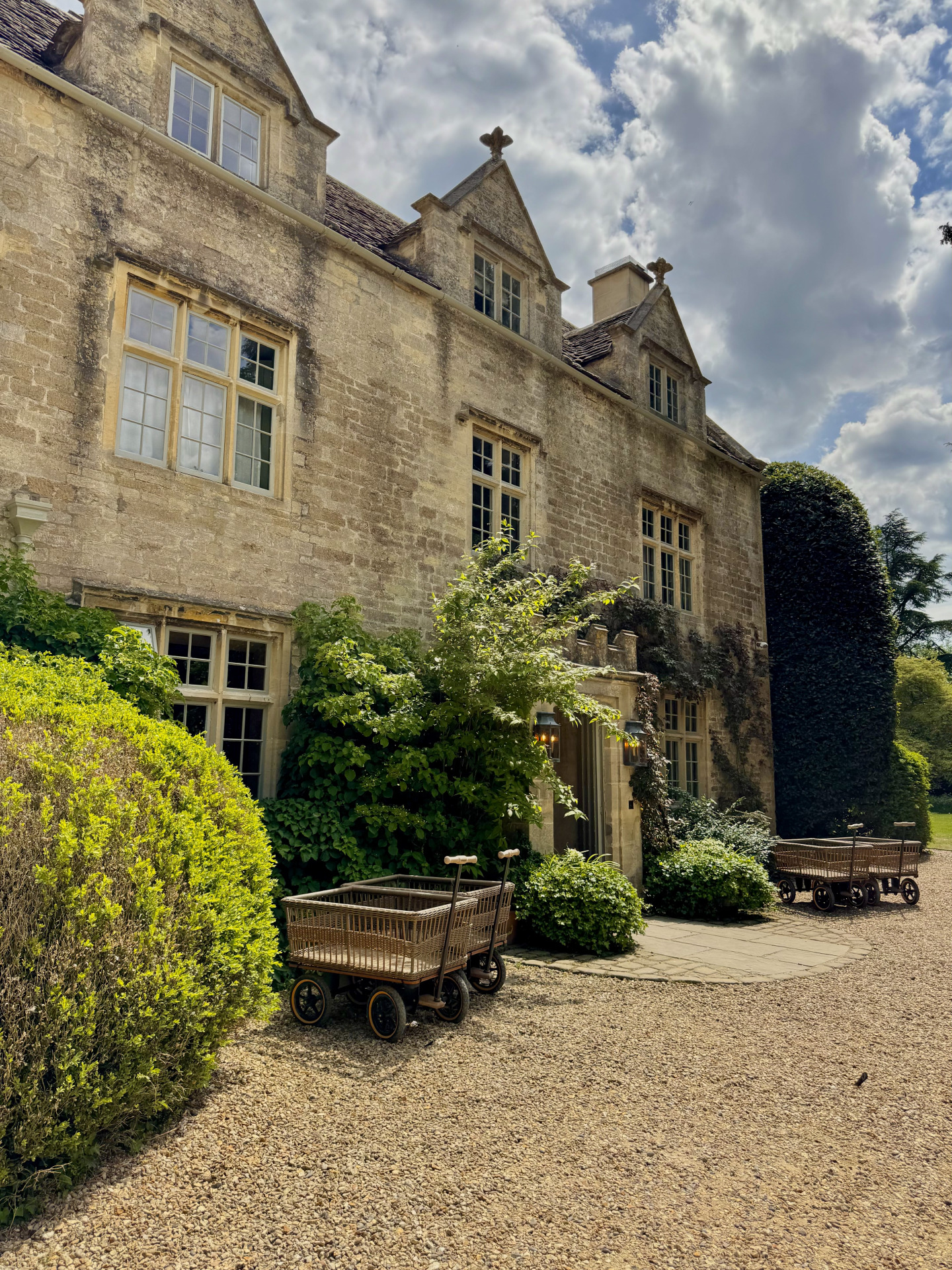
Food is one of the great pleasures of a Cotswolds stay.
The region is known for beautiful villages, rolling hills, historic houses and private country homes, but its food and drink scene is just as important to the experience. A long lunch in a country pub, a private chef dinner at the house, a visit to a farm shop, a garden breakfast, a special occasion meal, a relaxed Sunday roast or a picnic made from local produce can all become defining moments of the trip.
The Cotswolds is particularly well suited to food-led stays because eating and drinking here rarely need to feel separate from the landscape. Restaurants sit in market towns and villages. Pubs are often part of walking routes. Farm shops make private-house stays easier. Local produce can shape meals at the property. Vineyards, breweries and distilleries can add interest for adult groups and longer stays. A well-planned dinner at the house can feel as memorable as any restaurant booking.
For guests staying in a private Cotswolds cottage, manor house, country house or estate, food should be planned as part of the stay from the beginning. The right mix of restaurants, pubs, provisions, private dining and relaxed meals at the property can make the whole experience feel more personal, comfortable and memorable.
This guide explores the best ways to enjoy food and drink in the Cotswolds, whether you are planning a romantic weekend, family holiday, milestone celebration, international trip or extended countryside stay.
Explore our collection of luxury cottages and country houses in the Cotswolds as you consider the right base for a food-led stay.
Why Food and Drink Matter So Much in the Cotswolds
Food and drink help set the pace of a Cotswolds stay.
A good meal can become the anchor of a day. A country pub can give purpose to a walk. A farm shop can make a private house feel ready for arrival. A private chef dinner can bring a group together without anyone needing to drive. A market-town lunch can turn a simple outing into something memorable.
The Cotswolds is not a destination where guests need to eat in the same way every day. One of the pleasures of staying here is variety.
You might have breakfast in the garden, lunch in a village pub, dinner cooked by a private chef, afternoon tea after a garden visit, a farm shop picnic, drinks by the fire, a celebratory meal in a restaurant or a quiet supper at the house after a day exploring.
That flexibility is especially valuable for private-house guests. Rather than being tied to hotel dining times or restaurant bookings every evening, you can shape food around your group, season and occasion.
The Best Food and Drink Experiences at a Glance
For refined restaurants and special occasion meals, look to the Cotswolds’ market towns, country-house hotels, village restaurants and food-led inns.
For classic countryside dining, plan long lunches, Sunday roasts and relaxed suppers in country pubs.
For private-house stays, use farm shops, delis, butchers, bakeries, cheesemongers and local producers to stock the kitchen and support relaxed meals at the property.
For celebrations, consider private chefs, catered dinners, garden lunches, drinks receptions and beautifully planned dining at the house.
For families, focus on easy meals, flexible kitchens, child-friendly pubs, local produce, barbecues, picnics and practical food planning.
For couples, prioritise atmosphere: long lunches, romantic dinners, village pubs, garden cafés, local wine and quiet evenings at the property.
For longer stays, create a food rhythm: regular provisions, favourite pubs, local shops, private dining, occasional restaurant meals and time to cook or entertain at the house.
Restaurants in the Cotswolds
The Cotswolds has a strong restaurant scene, ranging from refined dining and seasonal menus to relaxed market-town restaurants, country-house dining rooms and small village destinations.
For guests planning a private stay, restaurants are best chosen around the purpose of the trip. A romantic anniversary dinner has different needs from a family lunch. A milestone birthday needs a different setting from a relaxed midweek meal. International guests may want a place that feels distinctly English, while longer-stay guests may prefer restaurants they can return to more than once.
When choosing restaurants in the Cotswolds, think about:
- Occasion
- Distance from the property
- Atmosphere
- Menu style
- Dietary requirements
- Children and family suitability
- Group size
- Transport
- Season
- Whether lunch or dinner suits the day better
For short stays, book key restaurants in advance. A weekend can feel disappointing if the best meals are left to chance.
For week-long stays, mix restaurant meals with pubs, private dining and relaxed food at the house.
For extended stays, it is worth identifying several reliable restaurants across different styles: one for special meals, one for relaxed evenings, one for family lunches, one for nearby convenience and one for when guests visit.
The next article in this Food & Drink series will look specifically at the best restaurants in the Cotswolds, but as a general rule, the strongest restaurant choices are those that suit your base and itinerary rather than simply the ones with the loudest reputation.
Country Pubs and Long Lunches
A country pub is one of the classic pleasures of the Cotswolds.
It can be the reward at the end of a walk, the setting for Sunday lunch, the easiest family meal of the stay, a cosy winter evening, a relaxed drink after exploring villages or a long lunch that gently shapes the whole afternoon.
For many guests, especially international visitors, a Cotswolds pub is part of the imagined English countryside experience. Low beams, stone walls, fires, gardens, local ales, seasonal menus and village settings all contribute to the appeal.
But not every pub suits every occasion.
Some are best for food. Some are best for atmosphere. Some are excellent for families. Some are better for couples. Some work well after walks, while others are more suited to a planned lunch or dinner. Some are dog-friendly, some are not. Some are perfect in winter, while others are at their best in a sunny garden.
When choosing a pub, consider:
- Whether you want lunch, dinner or drinks
- How far it is from your property
- Whether you need to book
- Whether children are coming
- Whether dogs are allowed
- Whether you need taxis or a driver
- Whether it works after a walk
- Whether the menu suits the group
- Whether it is cosy, lively, refined or informal
For private-house guests, pubs are often best used as part of a wider rhythm: one or two long lunches, a Sunday roast, a casual evening meal and perhaps a relaxed drink before returning to the house.
Sunday Roasts in the Cotswolds
A Sunday roast can be one of the most satisfying meals of a Cotswolds stay.
It works particularly well in autumn and winter, but it can also be a lovely part of a spring or summer weekend if paired with a walk, village visit or slower afternoon at the house.
For families and multigenerational groups, Sunday lunch is often easier than dinner. Children are less tired, older guests may prefer daytime dining, and the group can return to the property for a quieter evening.
For couples, a Sunday roast can be part of a romantic winter weekend: a morning walk, a long pub lunch, then an evening by the fire.
For international guests, it can be a classic English countryside experience.
The most important advice is to book ahead, especially for popular pubs, larger tables, school holidays and weekends. A good Sunday lunch is rarely something to leave until the morning itself.
Farm Shops, Delis and Local Produce
Farm shops and specialist food shops are central to a private Cotswolds stay.
They allow guests to enjoy the region at home, not only in restaurants. Fresh bread, local cheeses, vegetables, meat, fish, pantry ingredients, cakes, wine, prepared dishes and breakfast provisions can completely change the feeling of arrival and day-to-day living.
For guests staying in a cottage or country house, this matters enormously. A well-stocked kitchen makes the property feel welcoming. A few excellent local ingredients can turn a simple supper into part of the experience. A farm shop stop can become a relaxed outing in itself.
Well-known food-shopping examples in and around the Cotswolds include Daylesford near Kingham, William’s Fishmarket & Foodhall in Nailsworth and The Cotswold Cheese Company in Moreton-in-Marsh, among many other local farm shops, delis, butchers, bakeries and producers.
Farm shops and delis are especially useful for:
- Arrival provisions
- Breakfasts at the house
- Picnics
- Barbecues
- Family meals
- Children’s snacks
- Local cheese and charcuterie boards
- Private chef ingredients
- Longer stays
- Guests who enjoy cooking
- Gifts to take home
For longer stays, food shopping should be planned practically. Identify the nearest proper grocery options, farm shops, delis, butchers and bakeries early in the stay. This makes the house feel much easier to live in over one week, two weeks or longer.
Stocking a Private Cotswolds House
A private house stay is much smoother when the kitchen is considered before arrival.
This is especially true for families, larger groups, celebrations and international guests arriving after travel. Nobody wants to reach a beautiful country house late in the day and then immediately think about shopping, snacks, breakfast or the first evening meal.
Depending on the stay, you may want:
- Milk, coffee, tea and breakfast basics
- Fresh bread and pastries
- Fruit, yoghurt and eggs
- Local cheese and biscuits
- Meat, fish or vegetables for cooking
- Children’s snacks
- Soft drinks and wine
- Ingredients for a first-night supper
- Celebration drinks
- Barbecue provisions
- Picnic ingredients
- Dietary-specific items
- Store-cupboard basics for longer stays
For short breaks, arrival provisions can make the first evening feel relaxed.
For week-long stays, a fuller food plan helps the property function properly.
For extended stays, stocking the house becomes part of the rhythm of living. Guests may want grocery deliveries, regular top-ups, private chef support, favourite local suppliers and a sense of how to shop well in the area.
This is where local knowledge and concierge support can make a major difference.
Private Dining and Private Chefs
Private dining is one of the most valuable food experiences for guests staying in a Cotswolds house.
A private chef dinner allows the property to become the setting for the meal. There is no need to travel, book taxis, manage children in a restaurant or move a large group between venues. Guests can gather naturally in the kitchen, dining room, garden or terrace, then enjoy the evening at their own pace.
This works especially well for:
- Milestone birthdays
- Anniversaries
- Family reunions
- Multigenerational gatherings
- Christmas and New Year
- Romantic dinners
- Private retreats
- Corporate stays
- International guests
- Longer stays
- Guests who want restaurant-quality food without leaving the house
Private dining does not have to be formal. It might be a tasting menu, a relaxed family supper, a garden lunch, a barbecue, a Sunday roast at the house, a children’s tea followed by an adult dinner, or a series of lighter meals during a longer stay.
The best private chef experiences are planned around the property. A house with a beautiful dining room may suit a more formal dinner. A summer garden may suit long outdoor lunches. A country kitchen may suit relaxed cooking and conversation. A large estate may allow for several different styles of dining across the stay.
Our Cotswolds concierge service can help with private chefs, dining arrangements, restaurant guidance and tailored food experiences.
Food for Celebrations
Food is often the heart of a Cotswolds celebration.
A birthday, anniversary, reunion, engagement, Christmas gathering or special family stay can be shaped around one or two memorable meals. These do not always need to take place in a restaurant. In many cases, the most personal celebration happens at the house.
A private Cotswolds property gives you the freedom to create the occasion around your group.
A celebration food plan might include:
- Welcome drinks
- Arrival supper
- Private chef dinner
- Garden lunch
- Afternoon tea
- Birthday cake
- Barbecue
- Sunday roast
- Champagne or cocktails
- Children’s meals
- Late-night snacks
- Breakfast the morning after
- Table styling and flowers
- Transport for any restaurant meals
For larger groups, planning is essential. Dining space, kitchen suitability, service, dietary requirements, timings, drinks, suppliers and cleanup all need to be considered.
For a three-night celebration, the best rhythm might be a relaxed arrival meal, a main private dinner on the second night and a gentle Sunday lunch before departure.
For a week-long celebration stay, food can be spread out more naturally: one special dinner, one long lunch, a few relaxed meals at the house and one or two carefully chosen restaurant bookings.
Food for Families
Families need food planning to feel easy.
A beautiful restaurant may not be useful if children are tired, hungry or not ready to sit through a long meal. A flexible kitchen, stocked fridge, good local provisions and a few family-friendly pubs can make the whole stay more enjoyable.
For family Cotswolds stays, think about:
- Breakfasts at the house
- Easy lunches
- Child-friendly pubs
- Picnic options
- Snacks for days out
- Barbecue meals
- Early suppers
- Private chef dinners with children’s menus
- Grocery deliveries
- Dietary requirements
- Rainy-day meals at the property
For younger children, it is often better to plan lunches out and dinners at the house.
For older children and teenagers, pub meals, market-town cafés, farm shops and informal dining can work well.
For week-long and two-week stays, the food plan should not rely entirely on eating out. The kitchen and local shops become part of the family rhythm.
Food for Couples
For couples, food and drink can make a Cotswolds stay feel especially romantic.
The best approach is usually not to overplan. A beautiful lunch, one special dinner, a market-town coffee, a garden breakfast, a pub walk and a private evening at the cottage can be more memorable than a packed restaurant schedule.
A couple’s food-led stay might include:
- Breakfast at the property
- A long country pub lunch
- One special restaurant booking
- Afternoon tea after a garden visit
- A farm shop picnic
- Drinks by the fire
- A private chef dinner
- Local wine, gin or beer tasting
- A slow Sunday roast before departure
For romantic weekends, keep travel distances short. Choose restaurants and pubs close enough to the property that the evening feels relaxed. If a special meal involves a drive, consider arranging transport in advance.
The strongest couple’s food experiences are often the simplest: good ingredients, beautiful surroundings and enough time to enjoy them.
Food for International Guests
International visitors often arrive with a strong idea of what Cotswolds food and drink might feel like: country pubs, afternoon tea, Sunday roasts, farm shops, local produce, beautiful restaurants and private dinners in a classic English house.
The region can deliver that beautifully, but planning helps.
Guests travelling from the United States or further afield may appreciate guidance on pub culture, tipping norms, reservation expectations, Sunday lunch timings, rural driving after dinner, seasonal menus and the difference between a casual pub, a dining pub, a country-house restaurant and private dining at the property.
For international guests, useful food experiences include:
- A classic country pub lunch
- Sunday roast
- Afternoon tea
- Farm shop visit
- Private chef dinner
- Local cheese and produce
- Market-town restaurants
- Garden or terrace dining at the house
- A vineyard, brewery or distillery visit where appropriate
Food can also help international guests settle after travel. A stocked kitchen, simple arrival supper or private dinner on the first night can make the start of the stay feel much softer.
Food for Longer Stays
For two-week, one-month or longer stays, food becomes part of daily life rather than a series of special occasions.
This is where the Cotswolds can work especially well. Guests can build a rhythm around local shops, favourite pubs, farm shops, private chefs, cooking at the house, weekend visitors, casual lunches and occasional restaurant bookings.
A longer-stay food plan might include:
- Regular grocery deliveries
- A list of nearby farm shops and delis
- A private chef once or twice a week
- A favourite local pub
- Easy family meals
- Barbecue provisions
- Breakfast supplies
- Market-town shopping
- Occasional special restaurants
- Local drinks and produce
- Seasonal ingredients
- Food for visiting friends or family
Over a longer stay, it is useful to have both special and practical options. Guests may want one exceptional dinner, but they also need good bread, milk, fruit, coffee, vegetables, pantry ingredients, children’s food and easy suppers.
A private house should feel effortless to live in. Food planning is a major part of that.
Afternoon Tea, Cafés and Bakeries
Not every food experience needs to be a major meal.
Afternoon tea, village cafés, bakeries, coffee stops and casual lunches can add a lot to a Cotswolds itinerary. They are particularly useful for garden days, shopping trips, rainy mornings, family outings and slower market-town visits.
A good café or bakery can give structure to a day without making it feel formal. It might be a stop after a village walk, a place to pause with children, a quieter alternative to lunch or a way to enjoy a market town without committing to a full meal.
Afternoon tea can work well for:
- Couples
- Mother-and-daughter trips
- Multigenerational groups
- Garden visits
- Celebration weekends
- International guests
- Rainy-day plans
For private-house guests, cafés and bakeries also help with day-to-day living. Fresh bread, pastries, cakes and coffee can make mornings and informal meals much easier.
Picnics, Garden Lunches and Outdoor Dining
The Cotswolds is ideal for relaxed outdoor eating when the weather allows.
A picnic after a walk, lunch in the garden, drinks on the terrace or a summer barbecue can feel completely in tune with the region. These moments are often less complicated than restaurant meals and can be especially enjoyable for families, couples and larger groups.
Good outdoor dining ideas include:
- Farm shop picnic
- Garden lunch at the house
- Barbecue
- Local cheese and charcuterie board
- Afternoon tea outside
- Children’s picnic in the garden
- Drinks before a private dinner
- Packed lunch for a walking day
- Riverside picnic where appropriate
For summer stays, outdoor dining should be considered when choosing the property. A beautiful garden, terrace, outdoor seating or pool area can change the way the house is used.
For longer stays, outdoor meals can become part of the everyday rhythm.
Vineyards, Breweries and Distilleries
Food and drink in the Cotswolds is not only about restaurants and pubs.
The region and its surrounding countryside include vineyards, breweries, distilleries and local drinks producers that can add interest to adult stays, celebrations and longer visits. These experiences can work particularly well for couples, groups of friends, corporate retreats and guests who enjoy tastings or tours.
Because some drinks-led destinations sit just outside the strictest Cotswolds boundaries, it is usually best to think in terms of “in and around the Cotswolds” when planning this kind of day.
A drinks-led experience might include:
- Vineyard tour or tasting
- Brewery visit
- Distillery experience
- Local beer or cider
- English wine
- Cocktails at the house
- Paired private dinner
- Celebration drinks
- Gifts to take home
For group stays, transport is essential. If tastings are involved, arrange a driver or private transfer rather than relying on someone in the group to drive.
The later Food & Drink article on vineyards, breweries and distilleries will explore this in more detail.
How to Plan a Food-Led Cotswolds Weekend
A food-led weekend should be simple and well paced.
For two or three nights, do not try to eat everywhere. Choose a few strong moments and leave space around them.
A good weekend might include:
- Friday arrival with stocked provisions or a private supper
- Saturday morning farm shop or village visit
- Saturday long pub lunch or restaurant dinner
- Sunday roast before departure
- Breakfasts at the house
- One relaxed drink or café stop
For couples, one special restaurant and one country pub may be enough.
For families, plan easy food at the house and one or two relaxed meals out.
For celebration groups, make the main meal private if the house is suitable. It often feels more personal and less stressful than moving everyone to a restaurant.
How to Plan Food for a Week in the Cotswolds
A week-long stay gives you more variety.
The best food plan usually mixes restaurants, pubs, private dining, local produce and relaxed meals at the property.
A balanced week might include:
- Arrival provisions
- One private chef dinner
- One special restaurant meal
- One or two country pub lunches
- One farm shop visit
- One picnic or garden lunch
- One easy family supper
- One Sunday roast
- Breakfasts at the house
This approach works because it does not make every meal an event. Some meals should be special. Others should be simple. The house should feel comfortable, not over-scheduled.
For families and multigenerational groups, the food plan should allow different needs. Children may eat earlier. Adults may want a later dinner. Some guests may prefer lighter meals. Others may want more indulgent dining.
A private house allows all of this to happen naturally.
How to Plan Food for Two Weeks or Longer
For longer stays, the goal is rhythm.
You do not need a restaurant booking every night. Instead, create a practical and enjoyable food structure.
For a two-week stay, consider:
- A stocked kitchen for arrival
- Weekly grocery or farm shop planning
- A few favourite pubs
- Two or three restaurant bookings
- One or two private chef meals
- A Sunday roast
- Casual meals at the house
- Barbecue or garden lunches
- Children’s meals and snacks
- Local produce for picnics
- A drinks-led experience if appropriate
For a month or longer, food becomes more residential. Guests may want a regular housekeeper, private chef support, favourite shops, repeat deliveries and a stronger sense of local routine.
The best extended stays feel easy because guests know where to buy food, where to eat well, who can cook for them, which pubs suit the group and how to make the house work day to day.
Choosing the Right Base for Food and Drink
Your Cotswolds base will shape the food experience.
A North Cotswolds stay may suit guests who want food-led villages, country pubs, farm shops, classic market towns and easy access to places around Kingham, Stow-on-the-Wold, Chipping Campden, Broadway and Chipping Norton.
A Central Cotswolds base can work well for Burford, Cirencester, Bibury, Fairford, the Coln Valley, Lechlade-on-Thames and family-friendly food planning.
A South Cotswolds stay may suit guests who want Tetbury, Nailsworth, Stroud, Painswick, Minchinhampton, Westonbirt, local producers and a slightly quieter food rhythm.
An Oxfordshire Cotswolds base can work well for Woodstock, Great Tew, Chipping Norton, Kingham, Burford and guests combining the region with Oxford or London.
For short stays, choose a property close to the restaurants, pubs or farm shops you are most likely to use.
For longer stays, choose somewhere that feels practical as well as beautiful. Access to shops, deliveries, pubs, restaurants and food suppliers will matter more over time.
Food and Drink by Season
The season can shape the way you eat in the Cotswolds.
Spring
Spring suits garden lunches, fresh produce, lighter menus, farm shops, countryside walks and pub lunches after visiting gardens or villages.
Summer
Summer is ideal for outdoor dining, barbecues, picnics, long lunches, local drinks, family meals in the garden and private chef dinners that make use of the property’s outdoor spaces.
Autumn
Autumn is one of the best seasons for food-led stays. Cosy pubs, seasonal menus, Sunday roasts, farm shops, woodland walks and fireside dinners all feel especially appropriate.
Winter
Winter suits private dining, country pubs, fireside meals, Christmas gatherings, New Year stays, long lunches and houses with strong kitchens, dining rooms and sitting rooms.
A good food plan should match the season. A summer stay should use the garden. A winter stay should use the dining room, fire and comfort of the house.
Common Food Planning Mistakes to Avoid
The first mistake is leaving key bookings too late. Popular restaurants and pubs can be busy, especially at weekends, during holidays and for larger groups.
The second mistake is trying to eat out for every meal. In a private house, some of the best meals may happen at the property.
The third mistake is underestimating transport. Rural taxis are not always available at short notice, and dinner plans may need drivers or advance arrangements.
The fourth mistake is choosing restaurants too far from the house. A long drive after dinner can take away from the pleasure of the evening.
The fifth mistake is ignoring the needs of children or older guests. Lunch may work better than dinner for some groups.
The sixth mistake is not planning the first night. Arrival food is one of the easiest ways to make the stay feel smooth.
The seventh mistake is treating longer stays like a series of restaurant bookings. Extended stays need practical food routines as well as special meals.
Questions to Ask Before Planning Food and Drink
Before finalising your food plan, ask:
- How long are we staying?
- Who is travelling?
- Are there children or older guests?
- Is this a romantic stay, family holiday, celebration or extended visit?
- Do we want restaurants, pubs, private dining or a mix?
- Should the first night be catered or simple?
- Do we need arrival provisions?
- Are there dietary requirements?
- How far are the nearest shops and farm shops?
- Are we comfortable driving to dinner?
- Should we arrange taxis or a private driver?
- Do we want a private chef?
- Is the kitchen suitable for the meals we want?
- Do we need a Sunday lunch booking?
- Would lunch out work better than dinner?
- How much time do we want to spend at the house?
Good food planning should make the stay feel relaxed, not rigid.
How Luxury Cotswold Rentals Can Help
Luxury Cotswold Rentals brings together exceptional private homes, detailed local knowledge and a highly personal concierge service to help guests enjoy the Cotswolds in a way that feels tailored rather than generic.
Food and drink are a natural part of that experience.
Depending on your stay, our team can help with private chefs, restaurant guidance, country pub recommendations, arrival provisions, stocked kitchens, celebration dining, transport, local produce, family meals, drinks-led experiences and longer-stay food planning.
For couples, that may mean a romantic dinner, a long pub lunch and a few quiet meals at the property.
For families, it may mean easy provisions, relaxed pubs and child-friendly food planning.
For celebration groups, it may mean a private chef, table styling, drinks, cake, flowers and a carefully planned dining experience at the house.
For international guests, it may mean a gentle introduction to Cotswolds food, from Sunday lunch and farm shops to private dining and classic country pubs.
For extended stays, it may mean helping the house function beautifully over time.
Explore our Cotswolds concierge service or browse our luxury Cotswolds properties to begin planning a food-led stay.
Our View: The Best Cotswolds Food Experiences Feel Personal
The best food and drink experiences in the Cotswolds are not always the most formal.
A special restaurant can be wonderful. So can a long pub lunch, a private dinner at the house, a farm shop picnic, a simple breakfast in the garden or a Sunday roast after a walk.
What matters is that the food suits the stay.
For a romantic weekend, choose atmosphere and ease. For a family holiday, choose flexibility. For a celebration, make the meal feel personal. For an international visit, include the classic countryside experiences. For a longer stay, build a rhythm around local produce, favourite places and private-house comfort.
Food should not feel separate from the Cotswolds. It should help guests experience the region more deeply.
Conclusion
Food and drink are central to a memorable Cotswolds stay.
The region offers restaurants, country pubs, farm shops, delis, local produce, cafés, bakeries, afternoon tea, vineyards, breweries, distilleries and private dining experiences. But the best food plan is not simply a list of places to book. It is a thoughtful part of the stay itself.
For short breaks, focus on one or two excellent meals and a smooth arrival. For week-long holidays, mix pubs, restaurants, farm shops, private dining and relaxed meals at the house. For celebrations, let the property become the setting for something personal. For families, make food easy and flexible. For international guests, include classic Cotswolds food moments without overloading the itinerary. For extended stays, create a rhythm that makes the house feel like home.
A private Cotswolds property gives you the freedom to enjoy food and drink your own way: at the table, in the garden, by the fire, in a village pub, at a market-town restaurant or through a carefully planned private chef dinner.
Explore our collection of luxury cottages, manor houses and private country homes across the Cotswolds and begin planning a stay shaped by good food, local produce, countryside, comfort and the people you are travelling with.